I can’t forgive Canada’s mainstream Jewish community for their (at the very least) applauding and their more active contributions to the genocide of more than 75,000 Palestinians in Gaza, including the 20,000 children in the last 33 months. I can’t forgive them for a similar role in the killing of more than 4,000 of late in Lebanon. And the murders of more than 1100 (including 242 children) in the West Bank. Whether their contribution to the murders was silence, obtuse denial of the facts, or pure and simple hatred of Palestinians. Canadian Jews’ culpability is evident. It’s not complicity – it’s culpability on an individual and a community basis. It certainly “takes a village” to run the pro-Israel campaign that has gone on unabated and without a care about the huge impact the genocide has made on the Jewish diaspora.
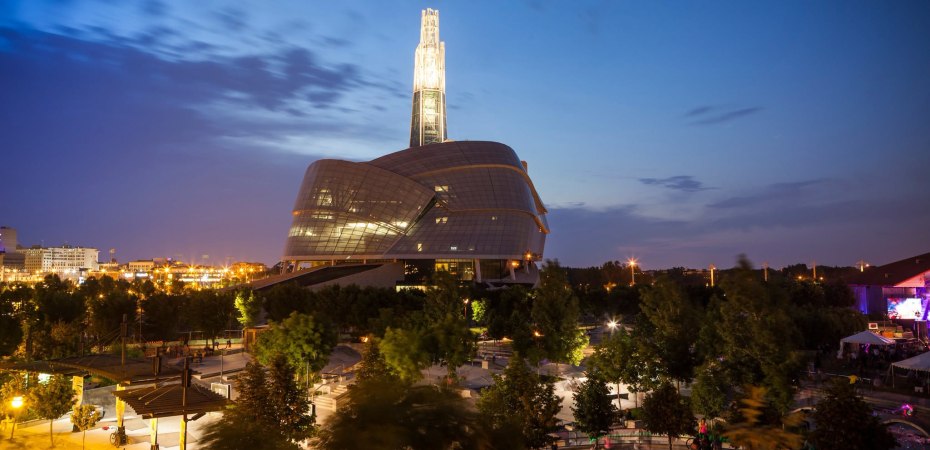
The exhibit Palestine Uprooted: Nakba Past and Present, that opened last weekend at the Canadian Museum for Human Rights (CMHR) in Winnipeg, is a case in point.
This exhibit had been planned for more than four years—there were historians, researchers and museum experts consulted. There was an advisory council. But truth be told so eloquently by Canadian physician Yipeng Ge, who himself has worked as a medic in several primary care clinics in Gaza, has said
“The exhibit was hard-fought by the local and broader Palestinian community in Canada. It was over a decade of organising work and pressure by Palestinians to have their stories told. … They fought the museum for their stories to be included even before the museum opened in 2014. It shouldn’t have to be this hard, and yet it is, because this is the reality and world we live in. That some stories are told while others are censored and dismissed because simply telling the truth sometimes can make others feel uncomfortable confront thee forms of systemic oppression that exist in this world.”
A potted history of the CMHR goes like this: In 2000, wealthy Winnipeg lawyer and media mogul Israel Asper wanted to build a museum that centred on the Jewish experience of the Holocaust. But that original idea has altered somewhat over the years. After a feasibility study in 2003, then-prime minister Jean Chrétien committed $30 million, and $100 million more. Over the years, Asper, The Asper Foundation and the Friends of the Canadian Museum for Human Rights Foundation raised about $150 million. A more acceptable idea was that the new building could be a “museum of tolerance” to commemorate 6,000 years of Indigenous history, at the historic forks of the Red and Assiniboine rivers in Winnipeg. In 2006, subsequent PM Stephen Harper welcomed the idea of a new national museum, the first to be built outside Ottawa. He pledged more than $120 million; the province of Manitoba and city of Winnipeg pitched in another $60 million.
Palestine Uprooted exhibit takes up 2.9% of the floor space devoted to the Holocaust exhibit
In 2014, the CMHR opened with “Breaking the Silence” a gallery that profiled five genocides “currently recognised by the Canadian government: Armenia, the Holodomor, the Holocaust, Srebrenica and Rwanda”. But that exhibit was dwarfed by the permanent exhibit, “Examining the Holocaust” in a huge gallery that occupies 4,500 square feet. In contrast, the current and temporary Palestine Uprooted exhibit is only 130 square feet – the size of a king-size bed in a small room with enough space to walk around it.
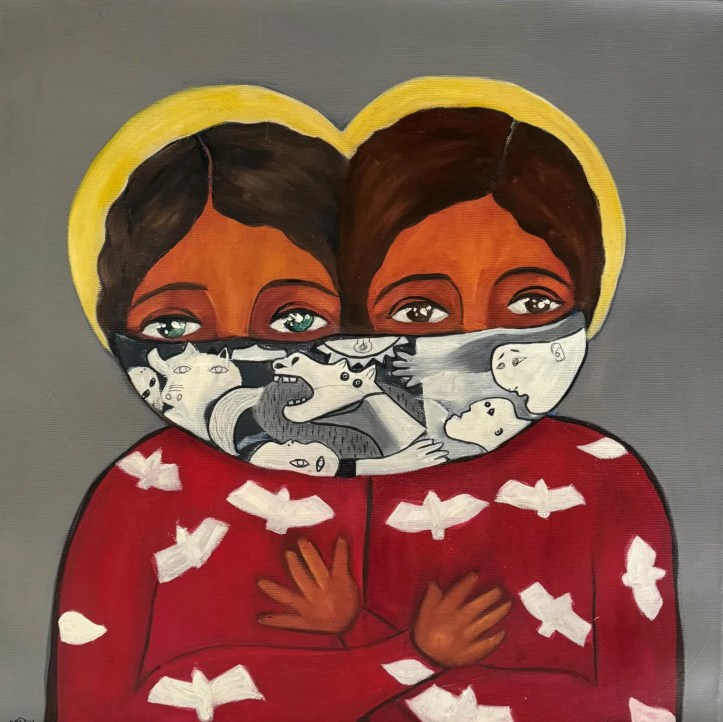
Twelve years after the opening, the Centre for Israel and Jewish Affairs (CIJA) that represents Canada’s Jewish establishment, has vigorously opposed the Nakba exhibit because they were not “consulted” in its planning and development. A CIJA media release states, “without transparency and with the involvement of activists who have described the core of Jewish identity as “a disease to be destroyed.”
What? With typical outrageous CIJA overstatement, an exhibit about the Palestinian side of the story is about Jews as a disease to be destroyed? Who says that nowadays, other than some white supremacist kooks? There are indeed “responsible” mainstream politicians who talk like this– but not about the Jews. Former Israeli cabinet minister, former Min. of Defence, Yoav Gallant, referred to Palestinians as “human animals” and readily accepted that his language “could incite genocidal actions”. https://www.reuters.com/world/un-committee-voices-concern-about-rising-israeli-hate-speech-against-2023-10-27/ Israel’s current finance minister, Bezalel Smotrich, has called for “erasing” entire Palestinian towns as there is no history or culture of Palestinians. “There is no such thing as a Palestinian people.” National security minister Itamar Ben-Gvir freely calls for “voluntary departure” (displacement) of Palestinians from Gaza so Israelis can resettle the area.
‘Consultation’ is fake news
Yet the mainstream Jewish community hangs on to the idea they were not sufficiently consulted and accuses the museum leadership of “egregious mishandling” of the exhibit. Noah Shack, CEO of CIJA, said that the exhibit’s opening last Saturday’s will have “serious real-world consequences.” Without irony, he cited PM Carney’s warning against “importing foreign conflicts into Canada.”
So what was last month’s Walk With Israel in Toronto –if not to raise support and praise for Israel? Key sponsors included CIJA and B’nai Brith. Surely marching to strengthen Israel as the force for continued genocide of tens of thousands in Gaza and the West Bank – not to mention the US and Israel’s killing of more than 7,300 in Iran and Lebanon since Feb. 2026 must count as “importing foreign conflicts into Canada.”
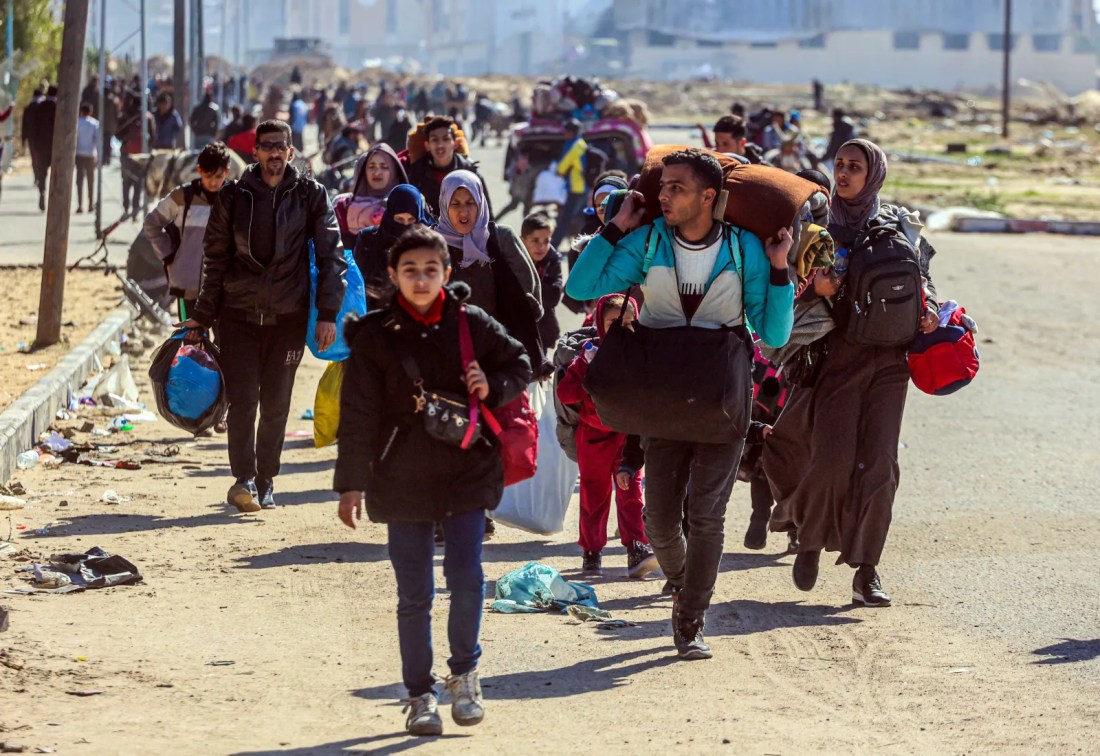
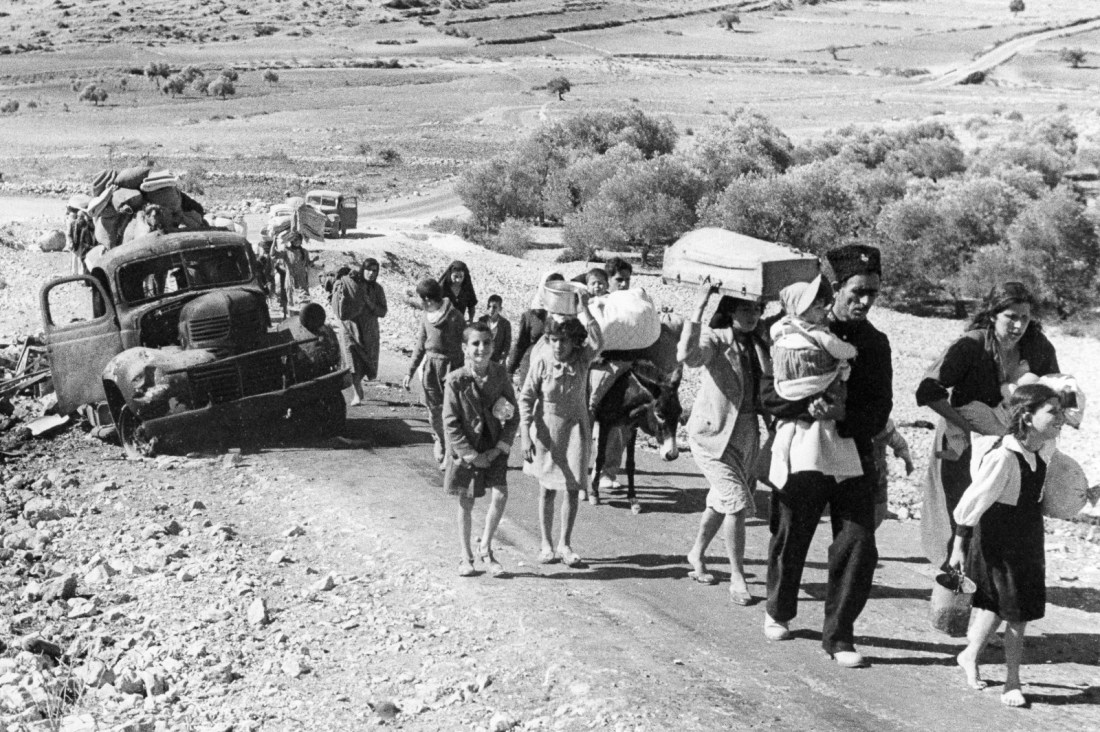
(AP Photo/Jim Pringle -file)
It is doubtful the pro-Israel supporters would have accepted consultation by Palestinians, or Germans or Ukrainians for the museum’s Holocaust exhibit. No one would have expected the Jewish community to accept that. But the pro-Israel forces now insist that without their input, their academic expertise and lived history – they must be “consulted.”
Prof Berlin has been a CMHR board member for eight years. He could have tried to change plans for the Nakba exhibit or, if he couldn’t, resign earlier. But he wanted to make a splash.
The one CMHR trustee who is Jewish is Mark Berlin, a professor at McGill University. Just days before the exhibit opened, Berlin resigned as a trustee and accused the museum of spewing “ideology” rather than an accurate history.
“Telling the story with a one-sided perspective chosen by the museum serves to deepen division and contributes to further hostility toward Jews in Canada,” Berlin said.
He failed to acknowledge that he had been a CMHR board member for eight years. He could have tried to guide or change plans for the Nakba exhibit or, if he couldn’t, resign earlier. But he wanted to make a splash – an anti-Nakba exhibit statement – so he resigned five days before the Nakba opening.

Berlin recently wrote he thought the exhibit reflected “institutional antizionism” and implied that the exhibit failed to “tell the full truth, not to sacrifice it at the altar of politics.” His resignation was in part to impress the “fans” – the declining number of Jewish Canadians (including those on the Walk with Israel) who back Israel no matter the ongoing war on hundreds of thousands of Palestinian women, elderly and children who are systematically shot at, bombed, made homeless and starved to death by Israel.
Of course, this caterwauling by the official Jewish organizations is not about consultation at all. That’s just a convenient excuse to engage in Palestine erasure, plain and simple. It’s about trying to prohibit and prevent or shut down anything that as much as mentions that a Palestinian people exists and that it has suffered under the Israeli apartheid regime.
The erasure campaign has two objectives. One is directed at the Canadian population as a whole, to win back hearts and minds horrified by the genocide and ethnic cleansing in the past three years. (More Canadians now support Palestine than Israel.) The second objective is to buck up the spirits of Israel’s fans in the Jewish community and elsewhere, who desperately still want to support Israel but are finding it increasingly difficult and unpopular to do so.
This used to be called “Hasbara” (Hebrew for Israeli propaganda or trying to “explain” Israel’s actions). But Hasbara has morphed into “Hashtakah” (Hebrew for outright silencing.) The latest strategy is to engage in relentless shut-down campaigns against critics of Israel, including attempts at prohibiting protests, throwing people out of jobs, dismissal from schools, denial of awards, criminal charges, doxxing, slander and abuse.
My anger is this: Since when do Canada’s Jews deserve a veto about any show or exhibit?
Since when do Canada’s Jews deserve a veto about any show or exhibit? There have been several controversial exhibits across the country, and I can’t recall the pro-Israel forces demanding to intervene. In 2005, a veterans’ lobby group asked that two paintings that depicted atrocities committed by Canadian soldiers in Somalia, be removed from the Canadian War Museum, I don’t recall any Jewish groups weighing in. Likewise in1989, a blockbuster exhibit “Into the Heart of Africa” was mounted at the Royal Ontario Museum in Toronto. It drew huge protests from Black Canadians and others who felt it was “racist and insulting”. I don’t think that the Jewish establishment organizations joined the protest.
We see the pro-Israel lobby has put their stamp or “trade mark” on Israel. No one is allowed to speak about, defend or help Palestinians. According to the lobby, Palestinians do not exist. And those who claim to be a Palestinians, are terrorists – even those as young as babies.
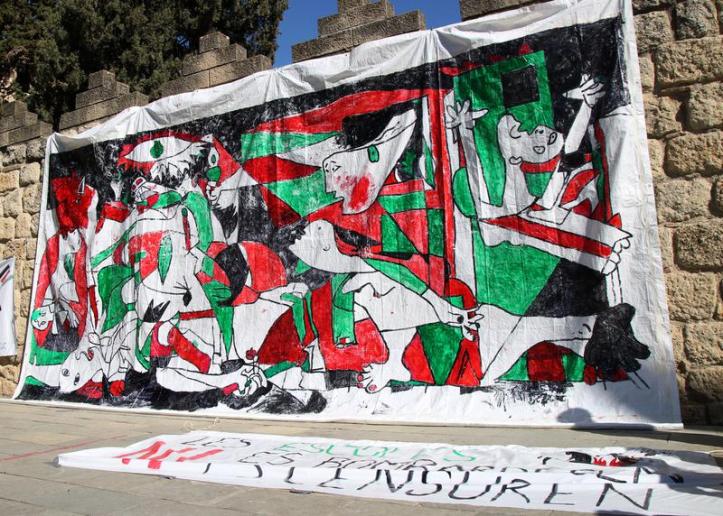
So the pro-Israel lobby and indeed the Jewish establishment always seem to take their seat at the table. And they have the ear of Toronto’s police chief, many politicians, academics, journalists, bigwigs and even the PM.
But two academics, Dr Yasmeen Abu-Laban, who is of Palestinian heritage and Dr Abigail Baken, who is Jewish, served on the Palestinian Content Advisory Network for the Canadian Museum for Human Rights and supported the exhibit. Last week, they attended the opening. Yesterday, they published an op-ed about their experience in The Globe and Mail. They saw
“… deeply meaningful relationships between the Palestinian and Jewish communities in Canada. Through our work on the museum’s advisory network, and informed by experiences and knowledge rooted in both Jewish and Palestinian contexts, it was a privilege to witness these relationships flourish through the significant labour and care put into this common project.”
The tables have turned; the CMHR has scored a big victory – the museum managed to open its Nakba exhibit despite the pro-Israel lobby’s attempts to stop it. As the museum’s CEO Isha Khan noted,
“We can also share these stories of Palestinian Canadians – you know, telling the story of one community’s human rights violation in no way should negate or minimize the experience of another.”
 Another ruined dinner party...