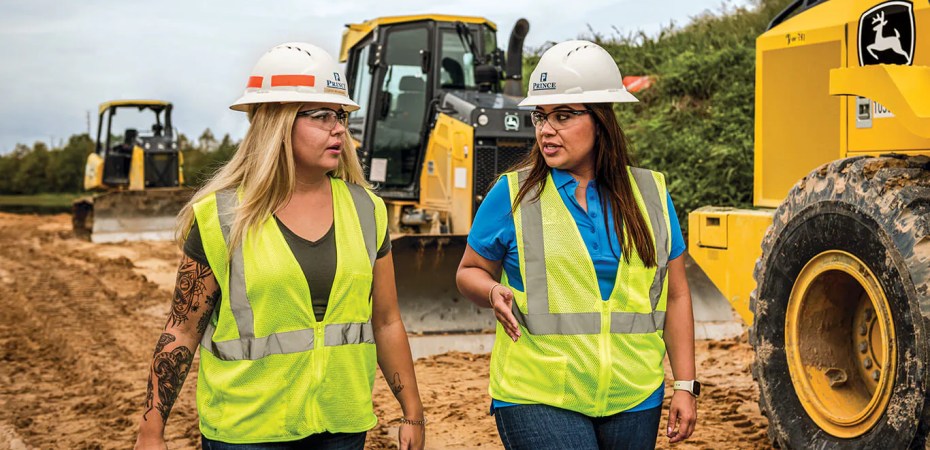
Thanks to Mark Carney, women are flocking to jobs that will create two highways up north. And if you believe that, I’ve got some swampland in the Arctic to sell you.
The photo above is an exclusive look at highway workers ready and able to build the 800 km Mackenzie Valley Highway from Wrigley (population 110) to Inuvik NWT. And workers, like these women, are also needed to build the 230 km extension of Highway1 that links the NWT to the port of Grays Bay Port in Nunavut. Both of these projects will bring minerals to markets to make big profits for corporations. The PM calls this the first “project of national interest” that he’s greenlighting.
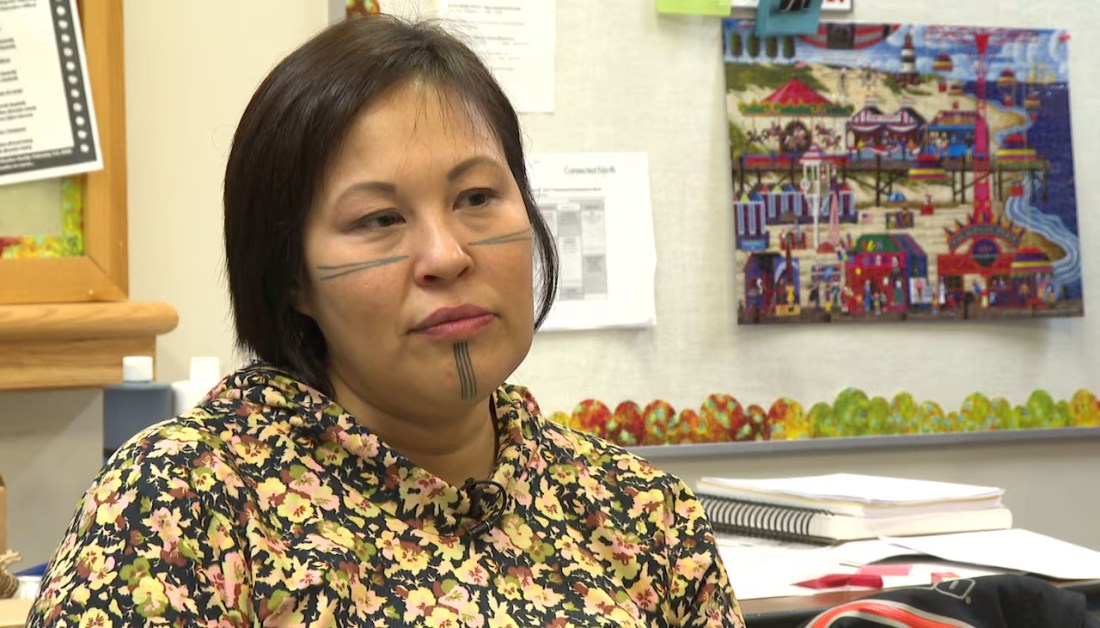
The cost is at least $2.6 billion. Critics say that is money better spent on building 8,000-10,000 new homes. Or It could fund an Inuit-led university. Or It could replace and upgrade every K-12 school in the NWT, Nunavut and Yukon. Or it could ensure every family in all three territories receives what Statistics Canada calls a “Northern food basket” of 67 healthy food items to feed four people – every week of the year for years to come. Inuk advocates, such as Leah Kadlun of Kugluktuk, Nunavut (200 km west of Grays Bay Port), say the highway project “doesn’t make sense at all.” Kadlun is critical of subsidizing massive mining corridors. Instead public money should be spent on addressing the Northern housing crisis, improving local education, and fixing gaps in emergency medical services.
“All that time and effort to get it up and running and for what? You know that money could be spent on bettering housing, bettering education, bettering our medevac service.”
In fact, Kadlun has actively petitioned for a 50-year moratorium on the development, citing the fast-tracking of the developments, because anything Ottawa deem “national building” can mean less regulatory approvals, and perhaps less than complete environmental reviews. For example, the federal government is also proposing to weaken key environmental standards under the Species at Risk Act and Impact Assessment Act. And just last week, Carney’s government passed an amendment to Canada’s Pest Control Products Act which allows cabinet to “authorize the use of pesticides despite unacceptable risks is a dangerous departure from science-based decision-making”.

Back to the northern highways, there might also be environmental disruption to the migratory routes and habitats of local caribou herds. Could be tricky, as First Nations people are concerned with the highways’ potential harm to the environment, to caribou and to disruption of the Inuk and the Dene way of life.
Mega-highway projects will unlock ‘critical mineral sovereignty’
PM Mark Carney
But our PM has other ideas. Carney insists that these highways will provide “all season” access to the critical minerals, and copper and zinc, and that the megaprojects will unlock “critical mineral sovereignty”. Local bootlicking politicians claim it will reduce the cost of living, since trucks and tractor-trailers will be able to transport food and consumer goods on the new highways to ports. There’s also the matter of national security – the current Liberal government is playing on Trump’s anxiety about northern security and about NATO.
One politician has publicly disagreed. The Dempster Highway connects Inuvik and Tuktoyaktuk NWT to 25 km from Dawson City, Yukon. Built 48 years ago, only 10 of its 700 plus kilometres are paved. The remainder is gravel. But it is deteriorating rapidly, thaws driven by climate change have caused sections of the road to sink and crack. Repairs to the Dempster Hwy usually require massive quantities of gravel hauled hundreds of kilometres along the same unstable route.
MP and leader of the Green Party, Elizabeth May notes
“If this is really about Arctic defence, surely the badly degraded Dempster Highway should be repaired first. Building an entirely new 800-kilometre highway through thawing permafrost while letting the existing Arctic road crumble makes no strategic sense.”
Of course the mining industry is elated. MMG Ltd, a Chinese metals producer based in Australia, claims it spent more than $80 million exploring various possible mine sites since 2009. Now with the government’s pouring in millions, the company can focus on mining – not on building roads. While the government claims the new roads will be a bonanza for northerners seeking jobs, a study in 2017 showed that 78% of fly-in-fly-out mine workers in Nunavut are from the south of Canada—not the north. More than 51% of construction workers are also from Canada’s south.
Jobs for Women?
So where does that leave the women in the photo at the top? Well if they can operate a broad range of equipment including excavators, backhoes, wheel loaders, bulldozers, motor graders or articulated dump trucks – there is lots of opportunity. After all these roads won’t be paved, but even if only made of gravel, there is lots of heavy work according to this site. True, engineers first have to test the soil and ensure it can handle the load of a new road. Workers would then have to remove rocks, boulders and anything in the way. It’s above the treeline, so there won’t be trees in the way. Then the excavation and leveling begins with a sub-layer, then the crushed gravel for strength and drainage. Then there is the binder layer that holds everything together for the heavy traffic. The only saving is the highways won’t have a hot mix of asphalt on top.
Okay, let’s stop being sarcastic. In reality, this is all about jobs for the boys. High paying ones too.
We’re back to fly-in and fly-out road building operations. Women with families can’t or won’t take the jobs. Besides, which women have the training and experience to do those jobs? Do women want to live in men-camps? Welcome to the prime minister’s nation building plans – minus more than half the population

