What to watch…
If you are going to watch one series right now, watch Should I Marry a Murderer? (2026) on Netflix. It’s nothing like you imagine. A 30-year old British pathologist, Dr. Caroline Muirhead plays herself. She lives in Glasgow and has a responsible medical position at a hospital. Having been hurt and ditched by a long-time boyfriend, she scours dating sites for a new man. She claims what she wants is a‘real’ man, one who loves the outdoors, is handy, likes to hunt and likes challenges of rural life. She begins to date Alexander “Sandy” McKellar. McKeller lives and manages a large sheep farm kilometers from Glasgow.
The thing that is special about this series, is that it is narrated by Dr Muirhead herself. Sitting in a pale cashmere sweater in her tasteful living room, she recalls her relationship with McKellar who became her fiancé. She tries to explain how the relationship—and her life blew up. Brilliant, frank and riveting.
An unusual documentary, it shows Muirhead’s spirit and self-delusion in equal measure; it begs us to ask, what could be the dangers in spilling the most private secrets to the person closest to you?
The Investigation is a six part miniseries from Denmark based on a true story. In 2017 a seasoned Swedish journalist, Kim Wall, age 30, disappears after an interview with a midget submarine owner Peter Madsen in Køge Bay, Denmark. This is a fascinating police procedural, good acting.
As one reviewer in The Times wrote,
“Just when you think you’ve had quite enough of true-crime murder stories and Scandi noir, along comes The Investigation to show that there’s life left in both.”
The series is on Crave, and here’s the trailer.
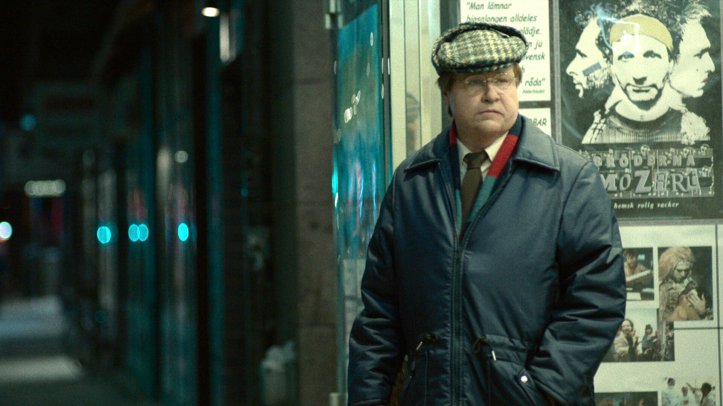


The Unlikely Murderer is a six-part miniseries from Sweden on Netflix. How many readers remember the shock and outrage that went around the world when the popular Swedish prime minister, Olaf Palme, was gunned down outside a Stockholm movie theatre, in the winter of 1986? For years, the police claimed they had no leads. Fourteen years later the police suggested the murderer had been an initial suspect –dismissed for lack of direct evidence. In 2000, everything changed, the former suspect died; suddenly the police named him as the killer. The subplot that is not fully explored was the murderer’s connections to the pro-fascists who emerged in high places after World War II. But still, worth watching. The trailer is here.
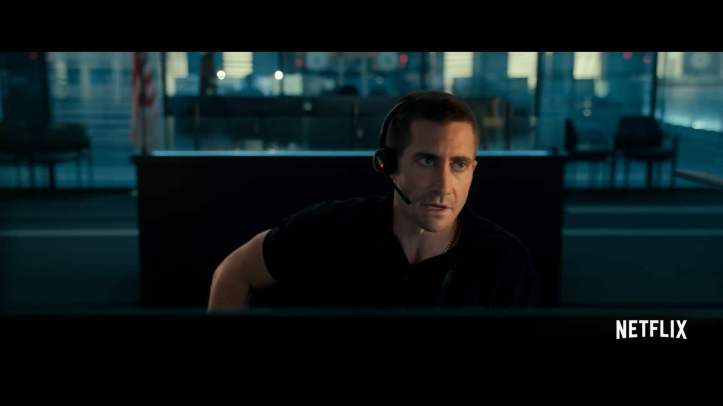
I think I saw The Guilty (2022) before, but I accidently saw it again on Netflix. It’s really worth watching this feature film, a fictionalized account of an American cop who answers a 911 call. For reasons known to viewers only in the end, active policeman Joe Baylor has been relegated to desk duty. A woman, Emily, calls to say she’s been abducted by her ex, and her pre-school children are home alone. She’s terrified. Joe is quick to anger and hot to act. He pulls out all the stops to rescue Emily – but things are not at all as they seem. First rate suspense film and here’s the trailer.
On Crave you can watch a great documentary about unions and workers, No Contract, No Cookies: The Stella D’Oro Strike. In 138 workers struck the Stella D’Oro biscuit plant in the Bronx, New York city. The one-time family owned business dated from 1930. Many owners later, a hedge fund company bought it and sold it to Lance, a snack food empire. Management wanted to cut wages and benefits for workers, many of whom had worked there for 30 plus years. After an 11-month strike, the workers – members of the BCTGM (the International Union of Bakery, Confectionery, Tobacco Workers and Grain Millers) won a Pyrrhic victory. On a technicality, the US Labor Relations Board effectively ended the strike and ordered they be allowed to return to work and paid backpay. But then Lance shuttered the factory and promised to move it to a non-union location in Ohio, which threw everyone in the Bronx plant out of their job. This is a 39-minute doc that will grab you – the workers are lively and committed to helping one another. But by 2010 (when the film was released) neoliberalism was in full swing and decent-paying working class jobs were vanishing. There is something very human and refreshing about No Contract, No Cookies. Here’s the trailer.
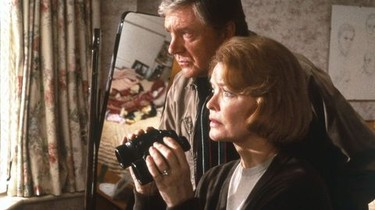
I highly recommend Pack of Lies, a “Hallmark Hall of Fame” presentation from 1987. The full feature film is on Youtube here. This is a British film about the Lona and Morris Cohen – aka Helen and Peter Kroger — an American couple who worked as Russian spies. In 1954 the couple settled in Ruislip, a suburb of London, UK. This film tells the story of MI6 “discovering” the spies through their best friends across the street. For more on the Cohen spies, see my newsletters here and here.
While in London, the Cohens (Krogers) also became good friends with Frank and Nora Doel. Frank Doel was the bookseller whose correspondence with the American author Helene Hanff became the bestseller, 84 Charing Cross Road. See below in what to read!
Never Stop Talking about Palestine
Al Jazeera screens a two part series, The Palestine Laboratory (2025), a documentary film by Antony Lowenstein.. Lowenstein, who is an author, a journalist and a filmmaker in Australia is also Jewish. He is a serious critic of Israeli apartheid and Israel’s genocide of more than 100,000 Palestinians in the last two and a half years.

The film is based on his 2023 book, reviewed here
“The Palestine Laboratory—How Israel exports the technology of Occupation around the world.” This thoroughly researched report also brings forth Lowenstein’s personal reflection on Zionism – an ideology he denounces, despite being raised within it, in part due to its inherent racial supremacy sentiment against non-Jews. Against this backdrop, the book paints a grim picture of the life across occupied Palestinian territories, with particular attention to Israel’s testing of its military and surveillance technologies on Palestinians.”
This is a fascinating film – we see the major arms manufacturers, their trade shows, and the end result of dispatching armed drones, missiles, bulldozers and sharp shooters to the West Bank and in Gaza.
It is rare for us to get a glimpse of the war industry, up close. His interview subjects are well chosen, and give us a sense of how vast and lucrative the arms industry is. Here’s the trailer
What to Read…
Many readers have heard of– or even read –the very dated 1970 bestseller 84 Charing Cross Road. But author Helene Hanff’s follow-up book, The Duchess of Bloomsbury Street, is a real delight. Hanff was a not very successful freelance writer who had barely travelled outside of New York city, when she started ordering books by mail from a used book store in London, UK. She was an Anglophile, loved British history, places and novels. For 20 years, Hanff carried on a relationship by letter with Frank Doel, the store’s manager who tried to fill her many rare book requests. Her book, 84 Charing Cross Road, based on that epistolary relationship was published nearly 56 years ago. She earned barely enough money from the book’s sales, to visit her beloved London the following summer. Staying in an older, down-at-the-heels hotel, she wrote in 84’s sequel, The Duchess of Bloomsbury Street (1973) she had to rely on fans of her first book to invite her to lunch and/or dinner as she couldn’t afford to eat and stay in the hotel. She made friends with actress Joyce Grenfell and her husband. In the car with the couple one day, the husband his wife,
“‘Why don’t you show her Fleet Street?’ I piped up from the back seat that I’d like to see London’s slums. ‘I’m afraid,’ said Joyce gently, ‘there aren’t any.’ Add that fact to Britain’s free medical care and you know all you need to know about the difference between Capitalism and Socialism.”
The people Hanff met and the hospitality they offered were incredible. She saw every tourist haunt, every library, every play she could, every parkside river with swans, and more. This is a delightful book that will take you away from this world into a place of good humour and warm feelings—and no Israeli genocide. Here’s an anecdote told to Hanff by Nora Doel, Frank’s wife. One New Year’s Eve, the Doels gave a party at which Lona Cohen (aka Helen Kroger):
“… arrived looking very exotic in a long black evening dress. ‘Helen, you look like a Russian spy!’ said Nora. And Helen laughed and Peter laughed and a few months later Nora picked up the morning paper and discovered that Helen and Peter Kruger were Russian spies.”
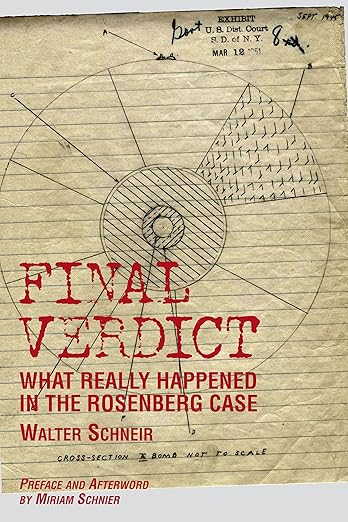
I read Final Verdict: What really happened in the Rosenberg Case (2010) by Walter Schneir. Schneir, an investigative journalist, compares the KGB files reprinted in Weinstein and Vassiliev’s The Haunted Wood to actual court transcripts. Schneir ‘discovered’ what really happened in the Rosenberg Case. One clue might be that Rosenberg was not the kingpin in the spy ring—his brother-in-law was. This is a fascinating look at the case that shook the 20th century.

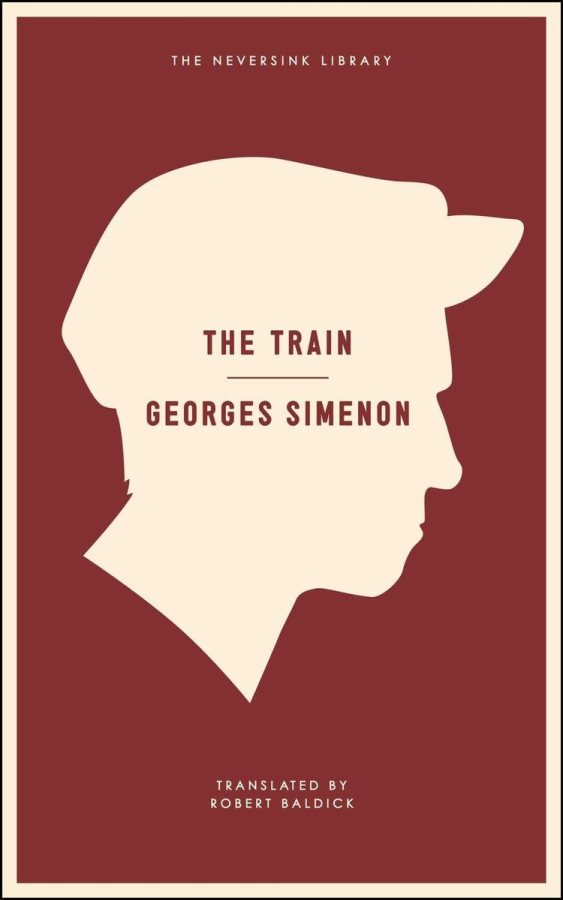
Some book reviewer I came across of late, commented that the best novel he had ever read was Georges Simenon’s The Train. Through the magic of interlibrary loans, I got the slim book, first published in 1961. Simenon, is the Belgian author of hundreds of novels, many that feature fictional Paris police detective, Jules Maigret. The Train is breathtaking, and leaves us hanging. Brilliant. It has nothing to day with Maigret or the mystery genre. The Train is a story about World War II. A radio repairman, Marcel Féron his pregnant wife and four-year-old daughter leave their home in Fumay, Belgium to cram aboard a crowded train to safety in northwest France. At the train station, the family gets separated –mother and daughter on one train, Féron on another. His experiences on the train are real and deep. When he can’t find his family, he forms a fleeting but alternate family that is remarkable – if in a way, tragic. This book you won’t put down.
Ars Gratia Artis – Art for art’s sake
And, for the sake of love, you can read Love in a Fallen City: Shanghai’s Marriage Market by Becky Zhang. Maybe you know that in China, there are 115 men for 100 women from the ages 24 to 50. That means parents who don’t want their sons without families, or stigmatized as single, or never having grandchildren resort to marriage markets to post photos and information about their sons. A great read in the Paris Review! And it’s here.

47% of Mexican workers earn minimum wage – or less. How can they afford tickets to the World Cup?
Who can go to the World Cup? How many days would you toil to go to a game? by Eduardo Porter is excellent. His look at Mexico hosting upcoming FIFA games should give us pause. For example, 47% of all workers in Mexico earn minimum wage or less — 315 pesos a day ($25 Canadian) is minimum wage. The writer notes:
“By the government’s count, this buys almost two “basic baskets” of essential goods and services–housing, food, transportation, healthcare and so on–which measure what a person needs to meet Mexico’s poverty line.”
World Cup tickets cost $4460 a piece
Tickets to the games hosted by Mexico at the Estadio Azteca in Mexico City cost $4460.43 Canadian per game. Mexicans would need to work the better part of a a year 177 days) to afford to buy one ticket. Read all about it in Porter’s Substack here.
Peace: What you can See & Do online!
Noted artist and crackerjack newsletter writer Australian Caitlin Johnstone is interviewed by her husband American Tim Foley as she paints a portrait of peace activist and Code Pink leader Medea Benjamin. The time spent watching – 40 minutes- will relax and rejuvenate you – the political talk and short talk about art will wow you. Watch now here