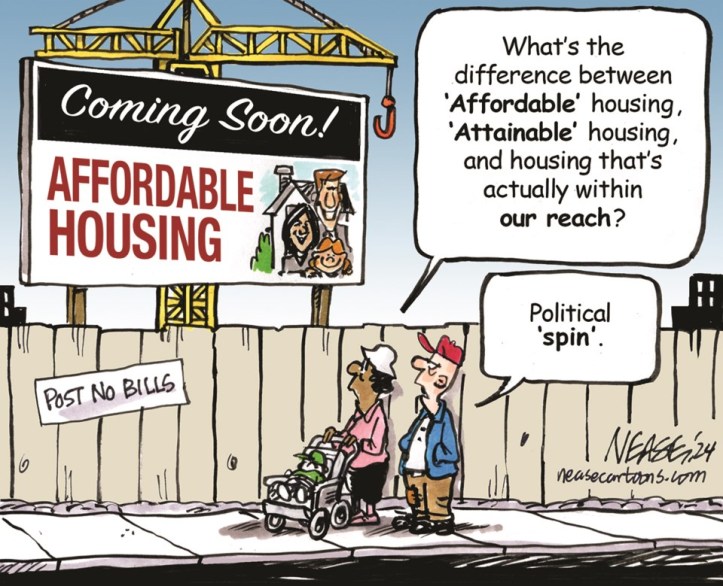
Affordable housing is a big problem for cities across the country– and Halifax is no exception. Our rents are comparable to Vancouver’s, but our average incomes are considerably lower. Halifax’s cost of living has been ranked as “extreme” by the Urban Stress Index. The Index puts Halifax above Toronto and Vancouver. For example, on a typical monthly income, rent absorbs 57.8%.
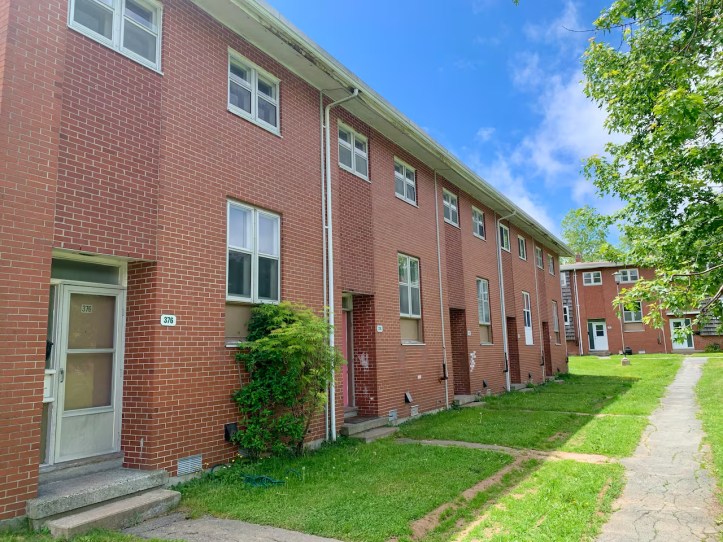
There was once an actually-existing affordable housing community with 397 townhouses that housed more than 1,000 people in Halifax Regional Municipality (HRM). Built in 1963, the low rise buildings occupied 12 hectares of land near the MacKay Bridge for decades. Today, those one to three bedroom townhouses and low rise apartments have been demolished or soon will be demolished in favour of what? In favour of the private developer consortium Basin Heights Community Ltd Partnership (aka Cresco, Fares and T&H Group Developments) building more than 1200 homes – and none will likely be affordable.
On the other side of the harbour, HRM has paid $4.3 million to buy in order to demolish a 7-unit building on Robie St—that the city owns and has recently renovated. For two decades it housed First Nations’ families but it’s been empty since June 2025. This despite the fact the city has data that 16-22% of our homeless people are Indigenous—though Indigenous folks being only 3.8% in the general HRM population . In fact, HRM is destroying not just this building but 50-70 affordable apartments and flats in 12 to 14 buildings at Robie and North Streets, all slated for demolition in order to (get ready for it) widen Robie St.
All are boarded up, ready to be demolished including the historic Dr Ligoure house — the former clinic and home of Nova Scotia’s first Black doctor. But destroying a heritage building was not a good look for Halifax, so the planks were removed. The Ligoure house may not be torn down, but it has a common wall with a house that will be. Throughout HRM there are more than 12,000 vacant lots – 3,000 in the urban core – yet virtually none have been incentivized to build affordable housing. Instead developers are routinely allowed to knock down existing buildings that include apartments with reasonable rents. Why is this happening?
(all 3 photos below courtesy of Matthew Byard)
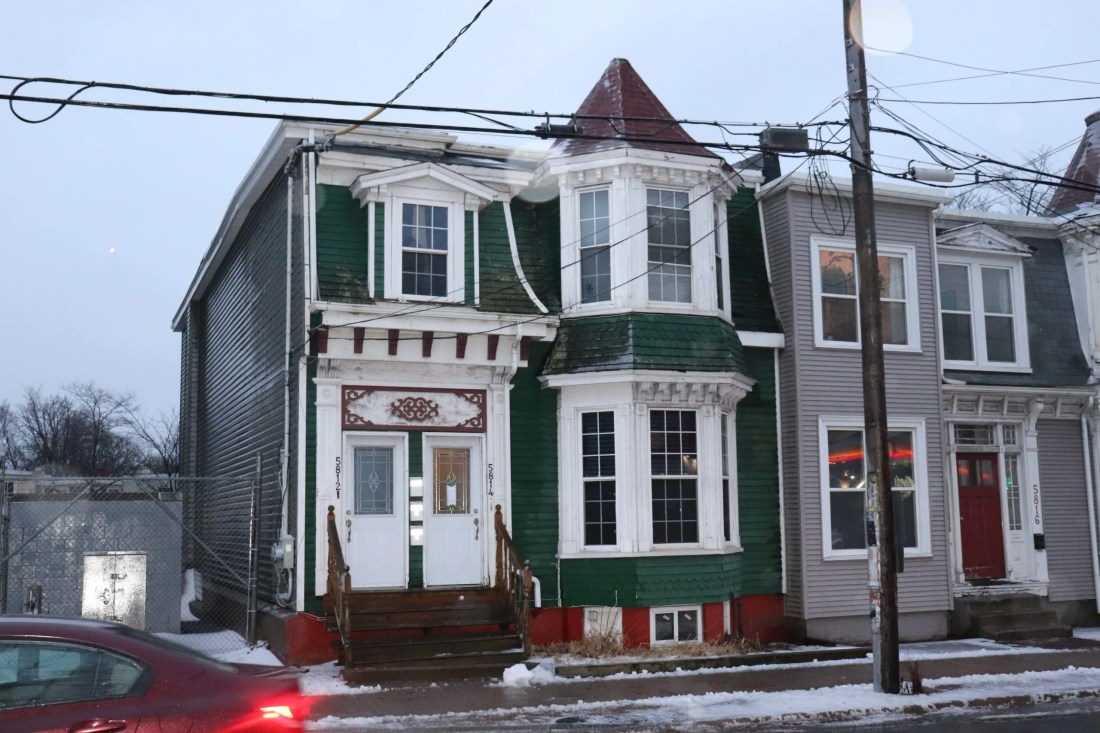
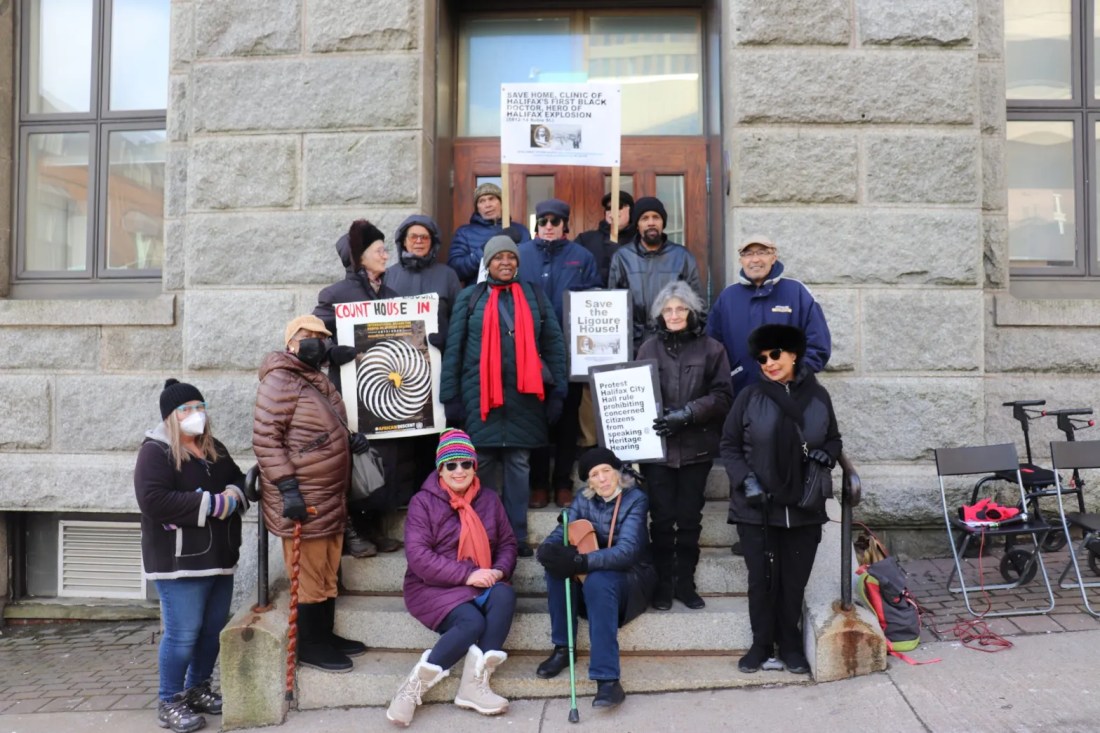
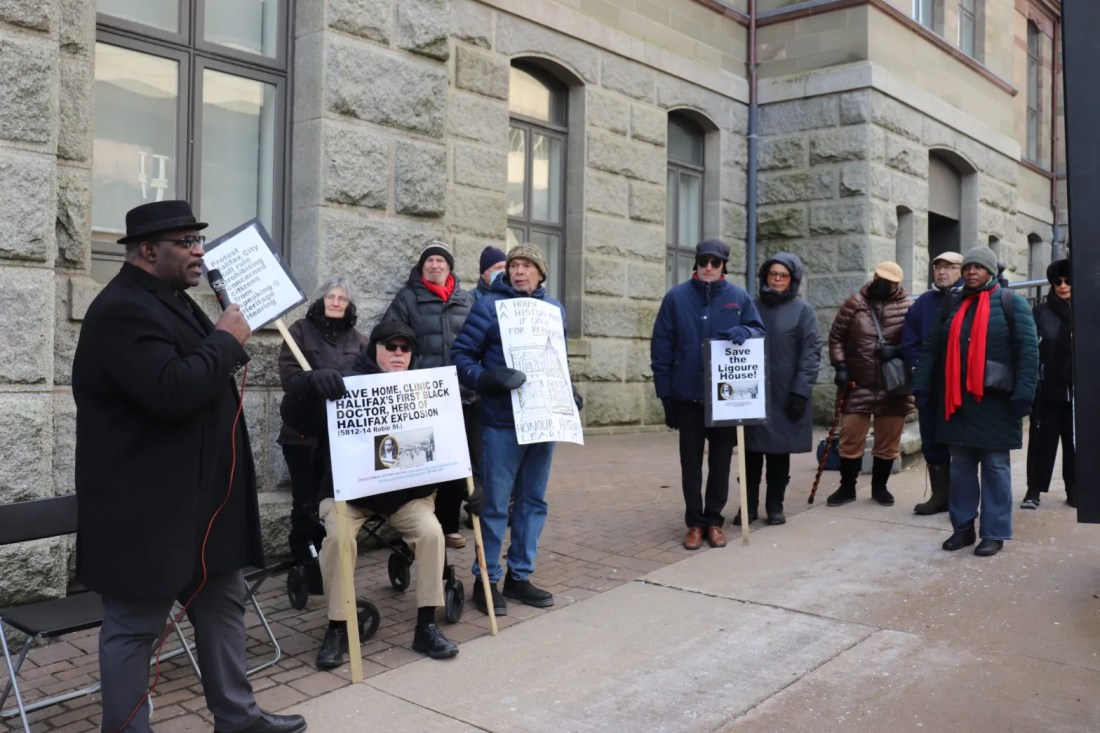
Part of the problem can be seen in any major city that funnels cars and commuters from suburbs where families live to downtown where business, employment, entertainment and retail are located. But in Halifax, whose downtown sits on a peninsula with narrow entry and exit routes, has the problem in spades.
The big plan is to widen a major road, Robie Street, that runs right up the middle of the peninsula. But is that really necessary? It was part of a bigger plan to get more people to live on peninsular Halifax, rather than further out in suburbs. Then they could take public transit to work. There was the idea that a speedier transit system could attract more riders. One way to get transit to move better was with bus lanes. But by the city’s own estimate, widening the street will shave only a few minutes off travel time for drivers on the busiest part of the street. Instead the city could use adaptive traffic signals (lights) that monitor traffic volumes as another potential way to improve traffic flow. But Halifax decided on widening Robie St. at a cost of more than $200 million.This despite the fact that transportation specialists note that widening streets actually attracts more traffic. One expert notes in If You Build It, They Will Drive that “congestion relief from capacity expansion vanishes within five years of capacity expansion” —meaning more drivers see an extra lane or two as almost an invitation to drive to work at peak hours.
In 2022, HRM didn’t have any idea about the cost of widening Robie St. At the time the estimated price tag was $53 that went to $73 million. With inflation, and with wishful thinking, it has now ballooned to $200 million.
Another example of wishful thinking is the two toll bridges over the harbour that carry traffic to and from Dartmouth.. When Premier Houston announced the removal of tolls to cross from Halifax to Dartmouth, the province waved goodbye to $40 million in revenue, and said hello to 10,000 more vehicles driving into the peninsula each day. In addition, Houston made parking free at the downtown hospitals which finds favour with most drivers, especially those that commute from suburbs to downtown.
“Demolition Capital of Canada”
Peggy Cameron, spokesperson for Friends of the Halifax Common (FHC), noted that it would have been better instead for both levels of government to spend the money to improve HRM’s public transportation service to increase ridership. Cameron cited a study that showed Brampton (outside of Toronto) increased bus ridership by 430% by simply improving bus frequency. York Region spent money on transit infrastructure that increased ridership by only 60%.

But HRM is still planning to spend $200 million to widen Robie St. No doubt that will mean public transit will definitely take a back seat to more people driving to work and back on the newly widened road. And it normalizes the reality that developers can demolish buildings – even ones that provide affordable apartments – which drives a stake into the heart of older and usable housing stock. HRM could still get the Award for Demolition Capital of Canada.
NB –NS residents can sign the new petition to help stop the $200 million Robie St. widening. Here’s a good reel.
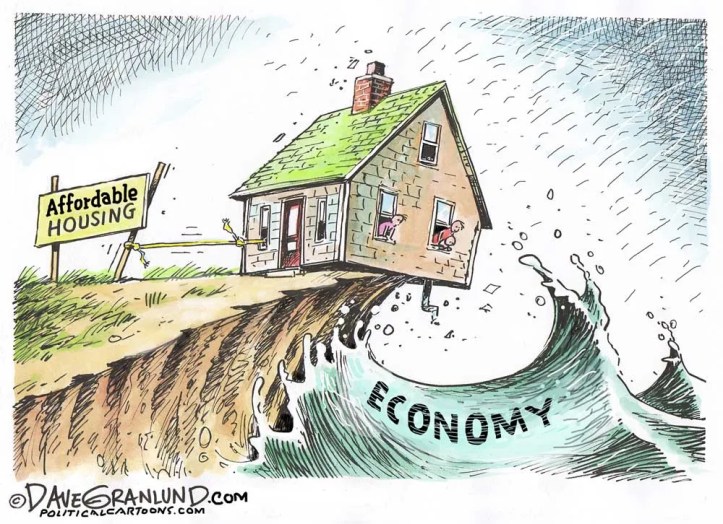
Cartoon at the top and below by Canadian cartoonist, Steve Nease (@Neasecartoons)