
I live three doors down from a nice bar and restaurant that I can’t really enter.
What abled people see are lovely hanging plants, and a sunny ambience. It has a big patio with tables, umbrellas, chairs and planters, then a swinging door to a vestibule; inside there is a sliding door into the resto.
What do I see? Nothing but barriers. One after the other. Consider the lot of the disabled. I do every day. One blow after another – it is bound to make me and my disabled colleagues totally discouraged.
In said bar and restaurant, the first door is necessary because wind tunnels of the tall buildings make it too cold in the winter for the staff and patrons; the sliding door is necessary because – well it’s disabled-friendly. The obstacle course of the patio is important to attract and retain customers. But not so much this customer.
You see, I use a rollator to get around. More than 40 years ago, I had a sport injury that broke my back and injured my spinal cord. After major surgery and half a year of rehabilitation, I was fit enough to have two children. For about 30 years, I was able to walk and do stairs. But now, as I age (don’t we all?) the disability and pain has caught up with me. Now, just in order to walk, I push a rollator – a walker with four wheels and a little seat. But I am pretty much stymied at even one step up or down. Even a steep slope or a gravel path is well-nigh impossible.
Above: In this 9 minute film from Disability Arts Online, a curator discusses and shows the Frida Kahlo “business model” that “pain can be beautiful when someone else has done the suffering.” Kahlo, a renowed Mexican artist, was acutely disabled much of her life; she painted mainly self-portraits.
You may say, look, the restaurant is privately owned. Maybe they have limited obligations to be accessible. But Nova Scotia is one of a handful of provinces that has passed an Accessibility Act, in 2017. That law spells out a Built Environment Accountability Standard that aims to prevent and remove barriers to accessibility in the built environment – whether private or public buildings.
But as far as I’m concerned, most so-called “accessible” buildings are so only in theory, but seldom in practice.
Let’s look at access to an important public building at Halifax’s Dalhousie University.
Access to public buildings
On Saturday, I wanted to attend a meeting in the main administrative building at Dalhousie — the huge Henry Hicks building. Honestly, I knew in advance that it wasn’t worth taking a chance to be able to enter and attend a book talk on post-Oct 7 Gaza. So I didn’t even try. Instead, I sent a scout, my husband, to confirm that I wasn’t just chickening out.. He went to the disabled entrance around the back of the building. A notice said to ring the bell for entry. But it was locked tight and there was no button to push. He went around to the building’s west side and after walking up a steep set of concrete (true there was a railing) he found the doors locked. Someone inside saw him and tried to open the door for him from the inside; but it was locked tight. He walked down the steps around to the other side of the building entrance. Up another seven or eight concrete steps into the front doors.
Was there an excuse for no accessible entrance? “Oh, that was on a Saturday,” some will say in defense of Dal’s shut down of most buildings on weekends. But I think it must be policy – the university’s policy – to make accessibility an afterthought. Especially on Saturdays.
So any time I think I might want to go any place outside my apartment, I must plan it out. And if there are too many barriers, I just give up in advance. Oh, where’s your pluck, where’s your get-up-and go, you may ask. Well, my pluck plunked and my get-up-and-go got up and went.

A protest is sometimes inaccessible
You would think that the social justice crowd I proudly belong to would make a point of rendering our protests accessible. Much as I hate to admit it, we don’t. For example, the Nova Scotia government is rolling out the red carpet for a brand new data centre in Cape Breton. Few want it, and fewer believe the data centre will bring 2,000 jobs, as the powerful tell us.
This weekend there was a protest on the Halifax waterfront against the data centre. From the downtown street there is a big slope (and no railing) down to the boardwalk where the demo was held. To avoid careening down the mega-slope, I’d have to walk at least 300 metres to a gentler slope to reach Lower Water Street. That was enough to discourage me from attending.
Are all services accessible?
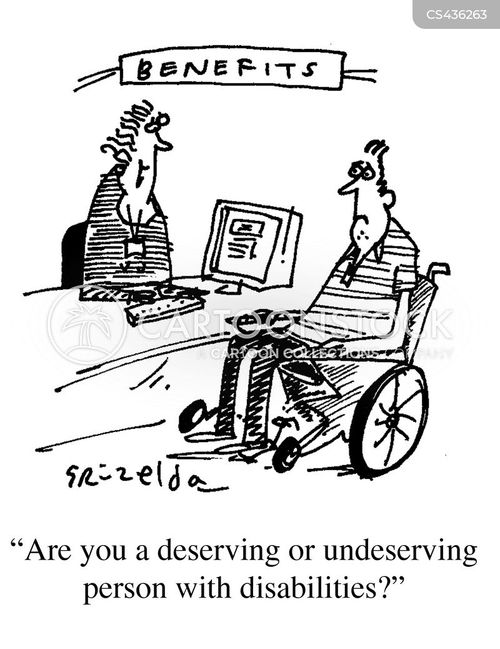
And then there are doors. Heavy doors. Just try opening one of them if you are disabled and use mobility devices. In terms of access to services, whether I go to the dentist or the hairdresser or to my favourite café, I have to gesture wildly in front of the glass door for someone to scurry to open the glass door in front of me. There are usually no push buttons, no bells. Even the six year old, state of the art YMCA that I love to frequent falls short. No one using a wheelchair or a rollator can easily open the heavy door and navigate the narrow halls to access the steam room or the sauna. I hear they’ve recently installed an automatic door opener, after many of us complained.
Elephant in the room
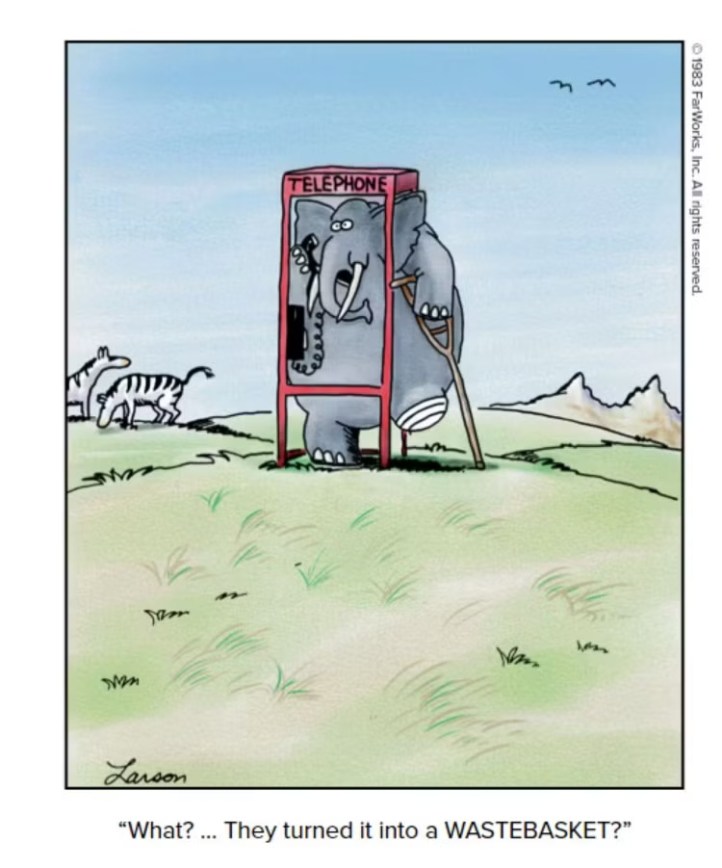
And the elephant in the room is the hospitality industry along Halifax’s storied Spring Garden Road. More than eight years ago the NS Human Rights Commission ruled that restaurants and bars had to provide the disabled clientele access to washrooms – in a “convenient location.” This was particularly needed because
“The ability to wash one’s hands is especially important for individuals who use wheelchairs for mobility. Their hands are in almost constant contact with dirt and germs because the palms of their hands rub against the rims of the wheels on their chairs/ which are in contact with rain water, mud, grime, dog excrement and other unpalatable substances.” (S.23).
Indeed the NS Food Safety Regulations [S.20(1)] mandates that the public at any restaurant or bar (including summer patios) must have access to handwashing and bathroom facilities in a “convenient location.”
In many eating and drinking spots, washrooms are a floor up or in the basement making them inaccessible for the disabled. Five people who use wheelchairs took the province to a human rights tribunal for not enforcing the Food Safety Regulations as a public health issue. Of course the restaurant industry agreed in principle but the cost caused them to bale. To this day, the province has never enforced the order. The whole case remains in a “restorative justice” limbo and the plaintiffs have all but given up.
The NS government stresses that 37.9% of Nova Scotians aged 15 or more have one or more disabilities, compared to 27% in Canadians as a whole.
I rest my case – next time I’ll write about the treatment Canada’s most liberal city – Vancouver – affords the disabled. They are in for a rough ride.

