
(reprinted, with a few updates for dates and figures, from last year’s post here)
Who marked the fact that Nov. 25 was the International Day for the Elimination of Violence against Women?
In Canada, there was no minute of silence.
No three minutes of silence like on Remembrance Day.
Last year, an article in The Guardian revealed that Giulia Cecchettin, age 22 and an engineering student in Italy, was days away from her graduation when she was murdered by her ex-boyfriend.

Her older sister, Elena, in social media and media interviews linked Giulia’s murder to toxic male behaviour. She labeled men who commit femicides as the “children” of patriarchy and rape culture.
Elena Cecchettin wrote,
“Femicide is a state murder because the state does not protect us. Femicide is not a crime of passion, it is a crime of power.” **
In Italy so far in 2023, 106 women have been killed, the majority at the hands of their partners or former partners.
Canada’s figures are worse
In Canada the figures are worse. According to the Canadian Femicide Observatory, one woman or girl is murdered every 46 hours. In 2022, 184 women or girls were killed mostly by men. That is a 27% increase since 2019. From 2018 to 2022, more than 850 women and girls were killed. In Ontario alone, from November 2022 to June 2023, 30 women were killed in 30 weeks.
Added today: Between 1999-2019, 37 women were killed by their partners in NS– fewer than 2 women every year. In the six months from September 2024-February 2025, six women in NS were killed by their partners. In the year ending Dec. 2025, 137 women and girls have been violently killed across Canada, according to the Canadian Femicide Observatory for Justice and Accountability.
Every December, I remember the Montréal Massacre. On Dec. 6, 1989, I walked to the Bowl on the University of Saskatchewan campus in the dark, in sub-zero temperatures, and in the deep snow. I joined Edmonton author, Myna Kostash, who lived for a year in Saskatoon as a writer in residence. We attended a rally and demonstration of rage — organized mere hours after we heard the tragic news.
“I’m not a feminist, I have never fought against men…”
Marc Lépine had walked into a mechanical engineering classroom at École Polytechnique, and separated the men from the women. Shouting, “You’re all a bunch of feminists, and I hate feminists!” he pulled out a semi-automatic weapon and killed 14 women. He wounded 13 others. One student who survived, Nathalie Provost, protested: “I’m not feminist, I have never fought against men.” Lépine shot her anyway.
Maybe what comes out of the Montréal Massacre – 35 years later is this: women are still the targets for men’s rage, for their unemployment, for their failures, for their jealousy – for everything.
No matter what women do or say – women who stand up to men, or say no to men or confront men (whether actually, or potentially or symbolically) become targets. Of course shooting women, or killing them with knives or cross-bows is extreme—but it happens.
Thirty-five years ago, the media in Québec and Ontario – which took their cue from the police and justice system – ignored the message in Marc Lépine’s suicide note. The media insisted Lépine was insane—that the fact that the 14 murder victims were women was mere coincidence.
Francine Pelletier was targetted by Lépine
Francine Pelletier, was and still is, a leading Québec journalist. Even she was a target of Lépine. Police found her name at the top of his “annex” –the list of feminists Lépine had planned to kill. In his note, he wrote the women on the list “nearly died today. The lack of time (because I started too late) has allowed more radical feminists to survive.”
“I always felt those women died in my name. Some of them probably weren’t even feminist. They just had the nerve to believe they were peers, not subordinates of their male classmates.” Francine Pelletier, Quebec journalist
Thirty-six years ago, Pelletier insisted that Lépine’s actions were highly political, that he targeted women and that he knew exactly what he was doing.
You can read a chapter I wrote in a book about the meaning of the massacre in my newsletter here.
Why Remember Dec. 6?
Some ask why do we continue to make so much of a single act (or a single actor) of violence? Yet, it is clear that Lépine himself considered his act, not as a personal outburst, but as a symbolic gesture. It is important that we do the same when we grieve.
Some in Canada will not easily forget December 6. A couple of years ago, The December Man, (image at the top) Colleen Murphy’s excellent play which won the 2007 Governor General’s Award for English-language Drama, had a run at Halifax’s Bus Stop Theatre.

Another reminder is a shocking interview here with Lépine’s mother, Monique. It’s also worth reading her 2008 book Aftermath: The Mother of Marc Lepine Tells the Story of Her Life Before and After the Montreal Massacre. It’s in the public library.

Women – even if they don’t openly challenge men — are seen as the enemy by misogynists, “Incels” and many seemingly ordinary men.
We can look at the Lionel Desmond Inquiry. In 2017 in rural Nova Scotia, Desmond – a 33-year-old Black veteran who had served two tours in Afghanistan with the Canadian military — shot his mother, his wife and his 10-year-old daughter in their home. He then turned the gun on himself. Police and the military have tried to frame Desmond’s actions as emanating from PTSD (Post-traumatic Stress Disorder (PTSD). But Dr Ardath Whynacht, a sociologist at Mt Allison University said, “This case is an anomaly if we look at it through the lens of PTSD.” Her research suggests that people who suffer from mental illness are more likely to be victims of violence, not perpetrators. Whynacht pointed this out:
“… at the end of the day, we have to ask the difficult question: Where along the line does a man learn to turn a gun on his wife and children when taking his own life? That is simply not a question of PTSD.” Dr Ardath Whynacht, Sociology professor, Mt Allison University
For even suggesting PTSD was not the only factor, and that family violence played a role, Whynacht was pilloried in social media, and received hate messages and death threats.
Just as Giulia Cecchettin had broken up with her partner, just before she was going to graduate as a professional engineer, Shanna Desmond said she was considering leaving her husband. She had recently graduated as a registered nurse. She had a good job in a hospital. Desmond was mostly unemployed.
We need only look at Nova Scotia’s 2020 Portapique Massacre in 2020, in which 13 of the 22 people killed by shooter Gabriel Wortman were female. The police have suggested that most of the shootings were not random. According to police and the mainstream media, Wortman’s violence was stoked by an argument he had that night with his girlfriend. However the justice system was reluctant to examine other factors which radiate male power – such as his power and control over his girlfriend. The Inquiry did look at Wortman’s owning and boasting about his arsenal of guns and grenades, his wearing a police uniform and driving around in a decommissioned, replica RCMP cruiser. The Justice Department tried to steer away from looking at the murders through a feminist lens. That aspect of the Inquiry seemed to be an after-thought.
The Gender Wage Gap: a symbol of gender discrimination
In the last 20 years, the wage gap between men and women has shrunk by only 5.5%. On average, men earned 18.8% more than women in 1998, and only 13.3% more in 2018. It still means women make 89 cents for every $1.00 that men do. that men do. Racialized women earn 59.3% of what white men earn. On average across Canada, women earn $3.79 an hour less than men. Surprisingly BC and Alberta tie for the biggest gender-pay wage gap — 17%!! Worldwide, it will take 267.5 years to close the gap between what women and men are paid.
“Not having pay equity [in BC] is absolutely crucial. This is an NDP government; they’re a little bit embarrassed by the fact that they have such a wide gender wage gap. So what they did was to put forward pay transparency.”Dr Marjorie Cohen, professor of Political Science at Simon Fraser University, Vancouver
Women have barely made a dent in the struggle for equal pay for work of equal value (also known as pay equity). Pay equity has all but fallen off the negotiating table when trade unions bargain and in some jurisdictions, legislated pay equity is in retreat. However, while not exactly a pay equity act, British Columbia passed its Pay Transparency Act (Bill 13) in May 2023. It says employers cannot ask employees’ for their pay history, and employers cannot punish workers for talking about salary. As of Nov. 1, employers had to disclose the expected salary ranges on all advertised jobs. Starting in 2023, some provincial agencies also need to file and publicly post pay transparency reports — a rolling requirement that will see B.C. employers with 50 or more employees provide that data by November 2026.
As Marjorie Cohen, an economist and Professor Emerita of political science at Simon Fraser University in Burnaby, B.C. noted, “Not having pay equity [in BC] is absolutely crucial. This is an NDP government; they’re a little bit embarrassed by the fact that they have such a wide gender wage gap. So what they did was to put forward pay transparency.”
Despite the federal Liberals making good on some of their promises for affordable childcare, still too many women are deprived of jobs and career advancement, because there are not enough daycare centre spaces, or qualified staff. Wages for daycare workers remain low, on average at just over $21 an hour. It is especially low when compared to the living wage — in Halifax, for example, the living wage is $28.30/hour. Provincial subsides are making some difference in funding centres and staff – it’s slow going. The exception is Quebec, which started $10 a day childcare 27 years ago. Three years ago, thousands of childcare workers who staff 400 government-subsidized daycare centres in Quebec went on strike against their employers. They cared enough about the lower paid workers in their centres to strike for raises for kitchen staff and maintenance workers at the daycares, and an improvements to their working conditions.
Men: women’s policemen and bosses
We hear that women have come a long way in their fight for equality. Yet in divorce, women suffer dramatic declines in their household incomes , their standard of living and often lose their housing and lose their footing on the housing “ladder”— in comparison to their ex-husbands.
While women suffer from out and out discrimination, in terms of earnings, jobs and opportunities, men continue to act as their policemen and their bosses, both at home and at work.
The fact is that even speaking openly about rebelling against men, against husbands, against boyfriends, against fathers, against bosses – can be dangerous.
“[Violence against women] is also a characteristic of patriarchal social structures and systems such as the police, courts, corrections, our governments, our education systems, healthcare and our media… it is part of the fabric of everyday life of women and girls.”from Call It Femicide: Canadian Femicide Observatory for Justice and Accountability (CFOJA) at the University of Guelph
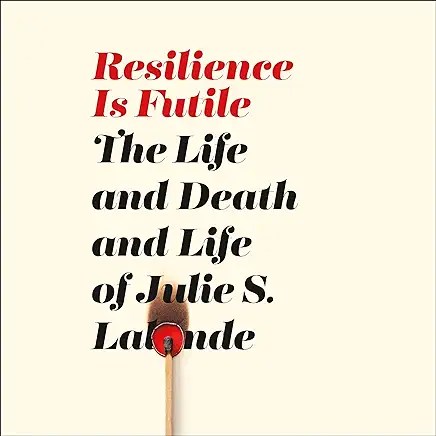
Ottawa-based author, sexual violence educator and activist Julie Lalonde details in her book, Resilience is Futile, that she was abused and endured rape by her boyfriend for five years. When she finally left him, he stalked her. As she points out in the book,
“I had survived something that was statistically impossible. Stalking kills. Domestic violence kills. Ontario’s domestic violence death review committee has a list of red flags for a woman experiencing domestic violence who is at risk of homicide. I met nearly all the criteria. I should not have survived. Yet, I was here. Countless women weren’t. the burden felt unbearable.”Julie Lalonde in TVO interview here.
**In the Cecchetti case in Milan, on 3 Dec. 2024 her boyfriend Filippo Turetta was convicted and sentenced to life in prison.
Share this:
Related
“Femicide is not a crime of passion; it is a crime of power” — Remember December 6December 5, 2023In “Canada”
32 Years after the Montreal MassacreDecember 5, 2021In “Canada”
33 Years Since the Montreal MassacreDecember 6, 2022Liked by 1 person
- Business
- Can’t Buy My Silence
- Canada
- Civil Terror
- Dr Ardath Whynacht
- Equity Watch
- Equity Watch webinar
- Government Benefits
- Government cuts
- Injustice in NS
- Journalism
- Killing of women
- Liz LeClair
- Military
- Murder & Mayhem
- Op-ed
- Portapique mass murder
- Rape Culture
- Sexual assault
- Sexual Harassment
- Uncategorized
- Violence
- wages
- Women
- Aftermath
- Feminism
- gender
- gender-equality
- Giulia Cecchettin
- Marc Lepine
- Monique Lepine
- Montreal Massacre
- politics
- Women
Post navigation
PreviousWhy are Canadian Jews afraid?
NextDon’t Argue with Them: What really works to change hearts and minds
Leave a comment
Write a comment…

Comment
Judy Haiven is a writer and activist living in Halifax, Nova Scotia. Formerly, she was a professor in the Management Department of the Sobey School of Business at Saint Mary’s University and is a specialist in Industrial Relations. Judy Haiven is a founder of Equity Watch, a human rights organization dedicated to fighting bullying and discrimination in the workplace.
Contact: jhaiven [at] gmail.com
Sign up for my free newsletter: http://judyhaiven.substack.com
 Another ruined dinner party...