Today, we have 35 tents in Victoria Park in Halifax’s downtown . There is also a garden shed where someone lives covered with Tyvek “homewrap”. How the tent-dwellers survived the deluges in late July and August—or how they will manage in the hurricanes in weeks to come – I don’t know.
There appears to be but one portable toilet for them all. There is no running water, or a tap.
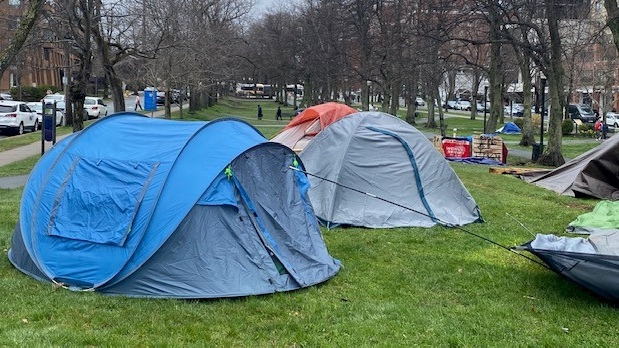
Passers-by gasp, avert their eyes, or walk quickly past Victoria Park’s tent city. A forlorn sign posted asks non-residents to refrain from gawking and taking photos because this park is all some people call home.
Some of the people who live in the tents are middle aged or older, but most are young spry people. I see a couple of kids running around but I don’t know if they live in the park or they are just playing there.
Our city fathers (and mothers) say this situation has little to do with them. It’s the province that’s to blame because the province is in charge of housing. Indeed my councillor Waye Mason echoed his hero, Mayor Mike Savage, who insisted the city has to find more green space so more people can pitch more tents.
Our mayor never suggests that lean-tos, sheds and tents should go up in the acres of parking lots at the waterfront— that’s because the parking lots are privately-owned and we owe it to developers who continue to sit (often for decades) on the empty lots, and motorists or tourists who to park their cars.
Item 1: St Patrick’s-Alexandra School site
The mayor never talks about St Patrick’s-Alexandra school and its grounds (at 2277 Maitland St in the city’s north end). St Pat’s-Alexandra is now a hulking ruin which once served 800 plus elementary school students—especially African-Nova Scotian children who lived in the area. About 12 years ago, HRM was approached by a community coalition that included representatives from the North End Community Health Centre, the Mi’kmaq Friendship Centre and the Richard Preston Centre for Excellence. The coalition wanted to buy the abandoned school and its four-acre site to create affordable housing, to provide community space, plus a home for their nonprofit agencies. The city rejected the proposal, and in 2016 the community lost its final legal appeal. As journalist Tim Bousquet noted in The Coast in January 2012:
“I’m told that the St. Pat’s sale is part of a larger directive from Butts [former Halifax CAO] … to sell off as much land as quickly as possible in order to raise capital for construction of a stadium. This directive also threatens to derail the rebuilding of the former Bloomfield School site as a complex oriented around community uses.”
What’s interesting about this is that CAO Richard Butts resigned from HRM in 2015 and shortly thereafter was appointed president of one of the major urban developers, Clayton Developments. One could ask– on whose behalf had he been working during his years at Halifax Regional Municipality (HRM)?
“the projects are shelved” indefinitely
JONO developer Joe Metlege
Then, after five years of negotiations, HRM sold the St Pat’s-Alexandra property to a major commercial developer, JONO Developments Ltd, for $3.6 million. JONO wanted to build two 20-storey twin towers on the site. However, to conform to the HRM’s Centre Plan, the city insisted JONO should instead build six four-storey buildings, not the towers.
In May 2023, JONO’s president Joe Metlege stated “the projects are shelved” indefinitely. Meaning there is not going to be any housing fix there.
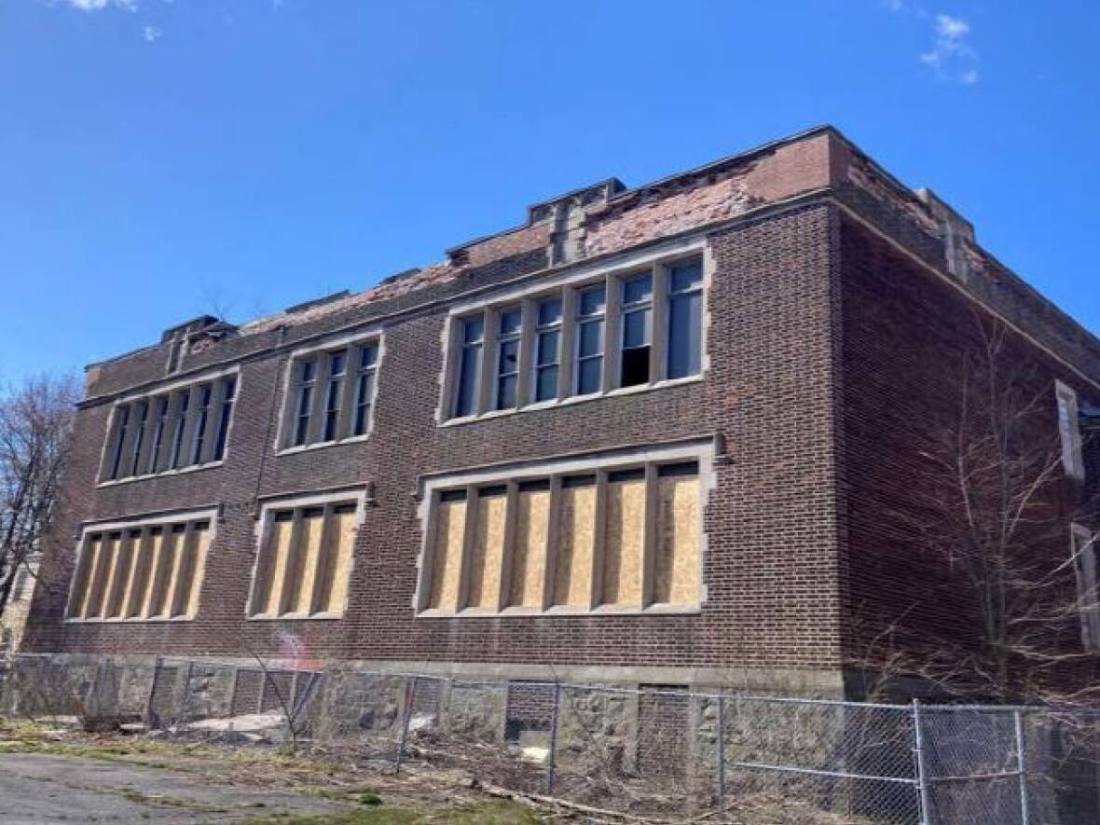
So the site, which has a red brick ghost building, sheets of of plywood hammered over its broken windows and doors, twisted metal, cracked concrete steps and patchy grass remains an eyesore. In 2009, a 38-year-old Indigenous mother of five, Tanya Jean Brooks, was murdered and her body was dumped in one of the abandoned school’s window wells.
The school was just about empty by then. As a grey-bearded caretaker at the school told a reporter, “It’ll be condos for sure. That’s the rumour, anyway.”
But there was no development on the way. As Tim Bousquet reported in The Coast at the time, the fact that HRM pushed away the community groups showed the development was “loaded dice, a stacked deck, smoke, mirrors.”
If there is a silver lining, it is the agreement with HRM that states something must be built there by Apr. 15, 2025, or the St Pat’s-Alexandra deal is subject to a buy-back from HRM.
But until then, the derelict site could be home to more people living in tents!
3 Community Groups slapped down by HRM
Let’s take a closer look: three community groups raised money and community spirit in their bid to turn St Pat’s-Alexandra into a community hub and create affordable housing. But HRM kicked those groups in the teeth. Not only did HRM sell to a private developer – but for the last decade absolutely nothing on that site has been built, cared for, or of help to the people of that community. JONO, the developer, has done nothing for anyone – except to sit on the land, pay minimal taxes (because there is no development) and rub the community’s noses –quite literally– in the dirt.
There were people – in three advocacy groups – that would have done something great, would have had the pride and caring that would have seen something decent result. Their activism and goodwill have been stripped away by HRM.
This is how business works in Halifax. . Unfortunately, our mayor, the councillors and the CAO deliberately killed the energy and the commitment the community had.
Whom does this serve? Well it serves the “business” interests of the city, the landowners, the developers, and the sports team boosters. The business is to drive communities from the peninsula – and to put a stop to people who want to reimagine and rebuild their communities to make them more livable, and more in the service of social change.
Now let’s look at Bloomfield.
Item 2: Bloomfield School site
What about the old Bloomfield school site on Robie and Almon St? In fact, the people involved with building that community site called themselves Imagine Bloomfield. And their imaginations were crushed.
“The city is always catching up with developers, but the city should be leading,” notes Susanna Fuller, a north-end resident, a community activist and a supporter of Imagine Bloomfield.
After the school was closed, more than 54 tenants, including artists, art professors, nonprofits and social agencies which helped the community had offices and studios in Bloomfield. For instance, Canadian Mental Health Association was in Bloomfield, and offered regular services to clients. However, Bloomfield became a community centre by default not by design, according to Susanna Fuller.
In 2004, Halifax Regional Municipality completed an indoor recreation facility review of Bloomfield. But none of the nonprofits fit within the indoor facility recreation plan, despite the fact that thousands of people were using the centre. Imagine Bloomfield wanted to ensure that the community pieces stayed in place. Imagine Bloomfield brought in Artscape, a Toronto-based consultancy, which helped to create a vision for the site. A master plan for Bloomfield was developed. Imagine Bloomfield was an active community group that prided itself on creative thinking, and problem solving.
In 2005, HRM started to push community people and resources out of Bloomfield; by 2014 everyone was gone. In 2012, Bloomfield called for Requests for Proposals (RFP), and working with the city, four or five applicants came forward. At least one wanted to lease the property from the city but the city wouldn’t look at its proposal.
When the NDP was in power, the provincial agency Housing NS made a bid to build housing on the site. But Housing NS had little capacity and no experience to build housing in this kind of community setting. When the NDP was voted out and the Liberals voted in, the Libs pulled the province out of the Bloomfield housing deal. Somehow city staff went from being collaborative to seeing Imagine Bloomfield as competition. Every other major city in Canada (and the US) has understood the importance of building community gathering spaces. But Halifax has destroyed this gathering space, and virtually ensured it would never happen again.
“It was like throwing a grenade into a place so meaningful to the community.”
Susanna Fuller
The city gave the property to the province. And an RFP went out. In 2021, Bloomfield was sold to a private developer. It was the end of 20 years of community building effort. According to Fuller, “It was like throwing a grenade into a place so meaningful to the community.”
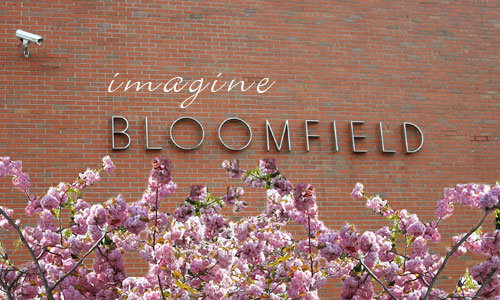
Imagine Bloomfield even got an award from HRM for community visioning. But according to Fuller, “The irony was that the city was completely undermining Imagine Bloomfield at the time. We had an annual festival, we brought in Artscape, we brought in the person who did 401 Richmond St.” 401 Richmond is an old Toronto warehouse that was converted to rent office space to more than 140 cultural producers and microenterprises, two cafes, art galleries, recording studios, and nonprofits. But it seems that HRM preferred to work with a developer than a nonprofit community group with a big vision.
Bloomfield is a microcosm of the entire province — nonprofits, community service groups, artists help build a vibrant economy and are what ensure a good society…
Fuller says, “Everything is now pushed to the margins, the margins were once at the centre of the Bloomfield centre in the early 2000s; it is the marginal that creates vibrancy. If we had been supported, we could have had co-op housing there.”
Bloomfield is a microcosm of the entire province – nonprofits, community service groups, artists, artisans help build a vibrant economy and are what ensure a good society. More for-profit housing does not.
Today there is not much grass at Bloomfield, but lots of space for tents on the cracked pavement, surrounded by broken metal fences. The old brick school now sports unsightly plywood over the windows and the walls are covered in graffiti. The property is derelict, it’s dangerous, and has gone from being a safe place to a dangerous one. Alex Halef, of BANC Investments Ltd, has owned the property since January 2021. At that time, he stated “we’ll have a design at some point this year without question.” He also said about his new proposed development, “It’ll be unrecognizable when it’s done, I think, for the better.”
According to the Bloomfield Master Plan, Halef had to agree to conditions of purchase including 10% of the units had to be affordable. Halef noted he planned for the rents to be 40% less than market rent for fifty years.
Developer now says there is “No timeline” to demolish Bloomfield
But more than two years later, in May 2023, Halef admitted there is “no timeline” for the buildings’ demolition which would cost about $2 million; Halef says BANC cannot afford it. It’s an eyesore, with rusted and torn fencing, empty shopping carts and garbage everywhere on the property. Rather than accepting responsibility for the state of the property Halef blames the problems on “rough sleepers” – people who use the premises as a place to sleep. He recently appeared at HRM’s Appeals Standing Committee to ask that the committee overturn the order to ameliorate the property’s dangerous and unsightly condition. BANC has faced at least 12 of these orders over the last two years.
HRM could have said to BANC, you have one year to develop the site; you must build housing. But there were no such requirements.
Item 3: St Patrick’s High School site
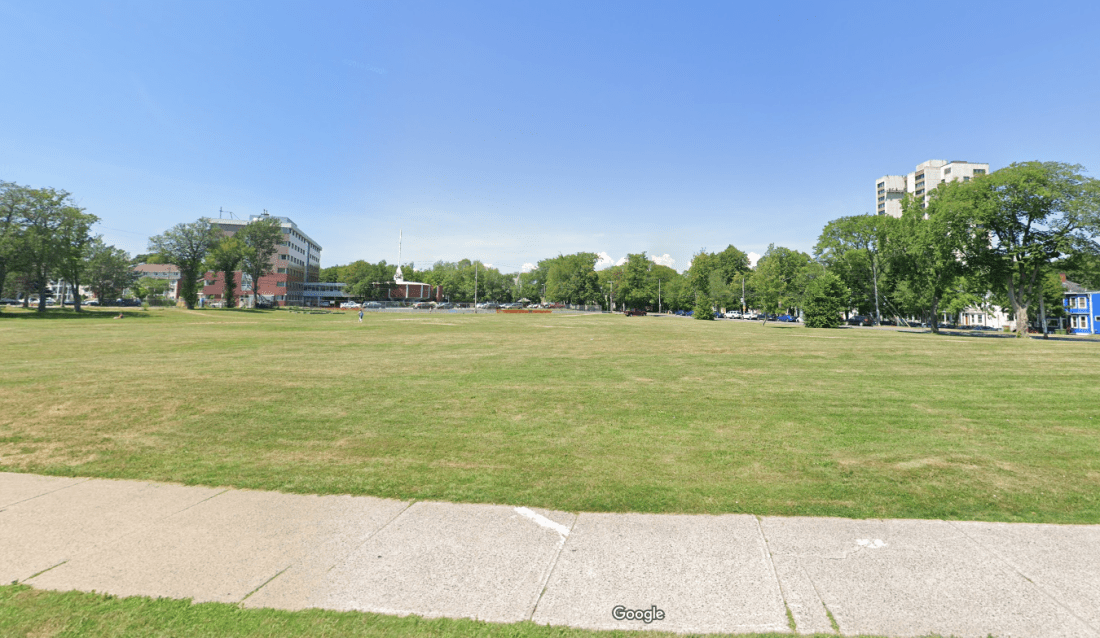
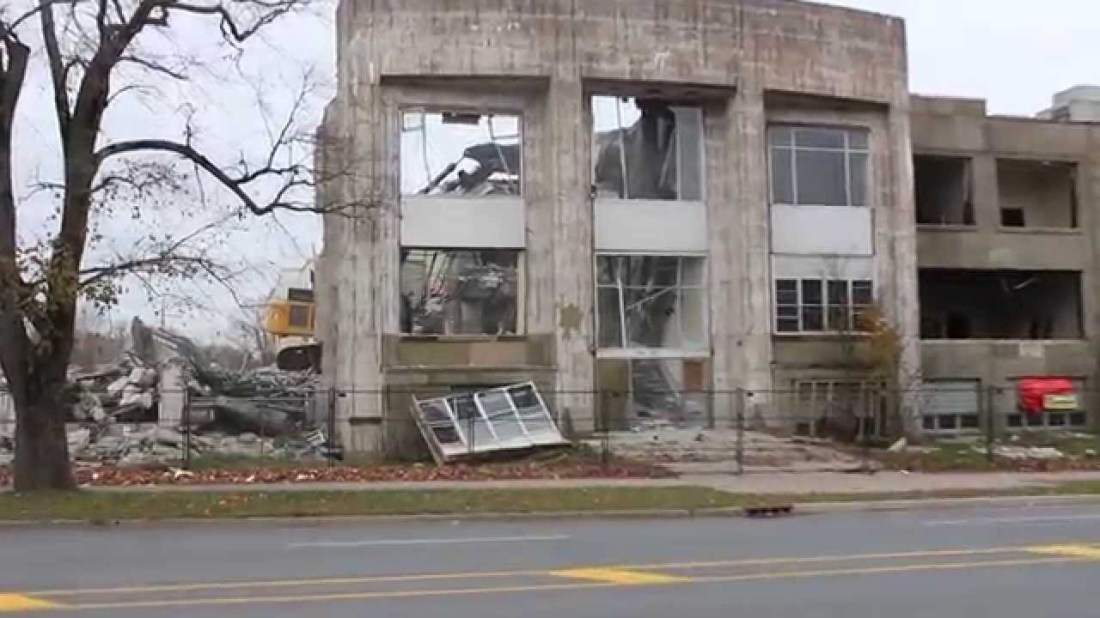
The third site which was sold to a developer, is the huge block on Quinpool Rd and Windsor St which once housed St Patrick’s High School. The school was closed in 2007, and torn down in 2015. Now it’s an overgrown 3.3 acre lot, with some volunteer (not officially sanctioned) community garden plots at one end. No benches, no trees. Perfect place for more tents to be pitched. The city sold this former school site in 2020 for more than $37 million to BANC Investments.
Below: empty field where St Pat’s High School once stood, Google photo taken in 2020; and the demolition of the school in 2015 (photo from Youtube, Chris D Johnson).
3 Sites, the same problem is HRM
Halifax has three massive former school sites on the peninsula where something of public good and civic worth could have been built. On two out of three lots, derelict buildings, garbage and junk still stand. For years the sites waited for their developer-owners to do something with them—but as far as HRM is concerned, there is no rush.
Every site was originally publicly-owned land – now each is in the hands of a private developer.
Why didn’t HRM simply lease the land to a developer for twenty-five years—and demand affordable housing be a key part of the development?
Where are the young Haligonians with ideas?
HRM Council is always asking where are the young energetic people who want to build this city, the people who want to grow our community? Well —these three lots tell the story.

The first story is that hundreds of community-minded folk of Halifax’s north end worked for more than a decade– through their non-profit organization Imagine Bloomfield—to create a plan for housing, community areas, arts and service provisions and more. Generations of people whose taxes and dedication had kept the school open, a school that many of their children had attended, got discouraged when the city ignored them and sold Bloomfield to a developer. That was a community of activists – a community of people who cared.
The second story — what of the scores of residents, and three community groups that wanted to build affordable housing and dedicated community space on the St Pat’s-Alexandra school site? They too wanted to improve their neighbourhood, and make a positive contribution to this city. Again HRM slapped them down in favour of a private developer.
The St Pat’s high school site is now zoned for 30 storey apartment towers according to the Centre Plan – exactly what community will the towers serve? A group of people from Common Roots Urban Farm who wanted a community garden on at least part of the St Pat’s site asked HRM for support. HRM said no, and pushed the community gardeners to a small park near the BiHi exit ramp.
HRM sold off public land, and with it scrapped community involvement
HRM sold off the land and destroyed the residents’ hopes of building their communities. It is difficult to harness the energy of community members and yet it is so easy to kill that spirit. And once it is killed, it is dead for years. The activists turn to other projects, or simply get on with their lives.
At all three sites, there are no serious plans under way to build affordable housing. There are no plans for co-op housing. Frankly there are no plans for anything of community value on these sites. Yet the city fathers and mothers patiently wait. Expecting good things to fall from the skies, expecting community support to grow from developers’ whims.
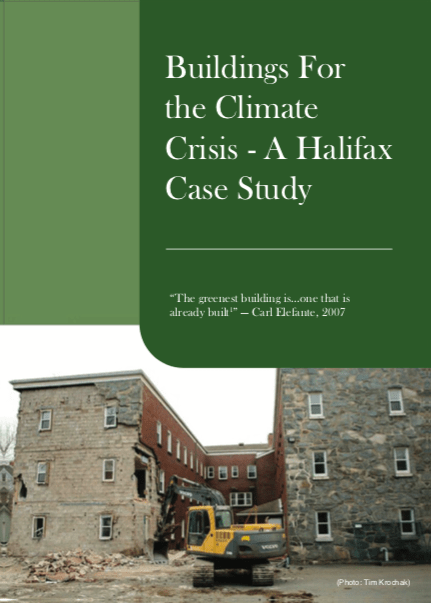
We expect that at some point towers will be built on each property; each building will be made of tons of construction materials such as pipes, glass, metal, concrete — a sink for greenhouse gases. Indeed, Halifax environmental activist and author Peggy Cameron wrote a critical report last year that found very high levels of greenhouse gas emissions (GHGs) are released up-front by high rise construction, developments, and demolitions. Still, properties will boast commercial shops and services on the main floors. Useful outdoor green space will be at a premium. Residents of Halifax will be deprived of affordable housing, and a genuine opportunity for community involvement.
Peggy Cameron’s report: Buildings For the Climate Crisis – A Halifax Case Study can be downloaded here.
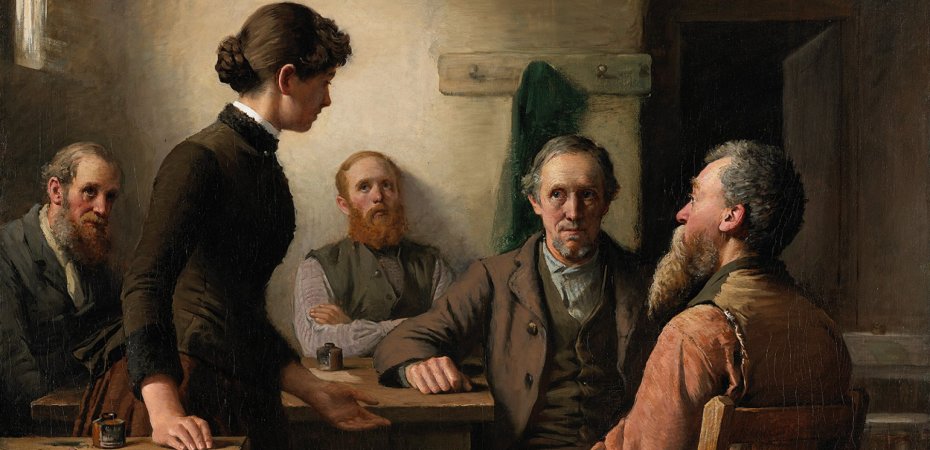
Featured painting at the top: A Meeting of the School Trustees (detail), 1885. Painted by Robert Harris (1849-1919), it is owned by the National Gallery of Canada, in Ottawa. The Gallery notes it was “painted shortly after Harris’ return from Paris, this work depicts a young teacher asserting herself before an indifferent board of commissioners in a school room on Prince Edward Island. The artist clearly conveys the men’s resistance through their facial expressions. The defiant pose of the teacher reflects the way in which women came to challenge authority and change the shape of society.” For more about Robert Harris, read this.
 Another ruined dinner party...
I wrote to Mayor Savage and Councillor Mason; 35 tent encampment and 1 Porta Potty on Cathedral Lane. Why aren’t there more toilets and where do they go with such a shortage?
LikeLike
thanks for this karen
LikeLike
Excellent piece, well done! Keep at it.
LikeLike
thanks colin. Please read today’s blog here https://judyhaiven.ca/2023/09/19/youre-what-this-war-is-all-about-or-not/
LikeLike
[…] For more on Bloomfield, the community and the other 2 Halifax schools, and their grounds, sold to developers, see my post How Halifax Kills Community Spirit here. […]
LikeLike