It was in the dying days of Hugo Chávez, that eight of us Canadians went on a study tour of Venezuela.
It was November, 2012. We knew Chávez was sick with cancer and that his second in command Nicolás Maduro, who many in the US media disparage as a “busdriver” (which was his job prior to being a politician) was poised to step up.
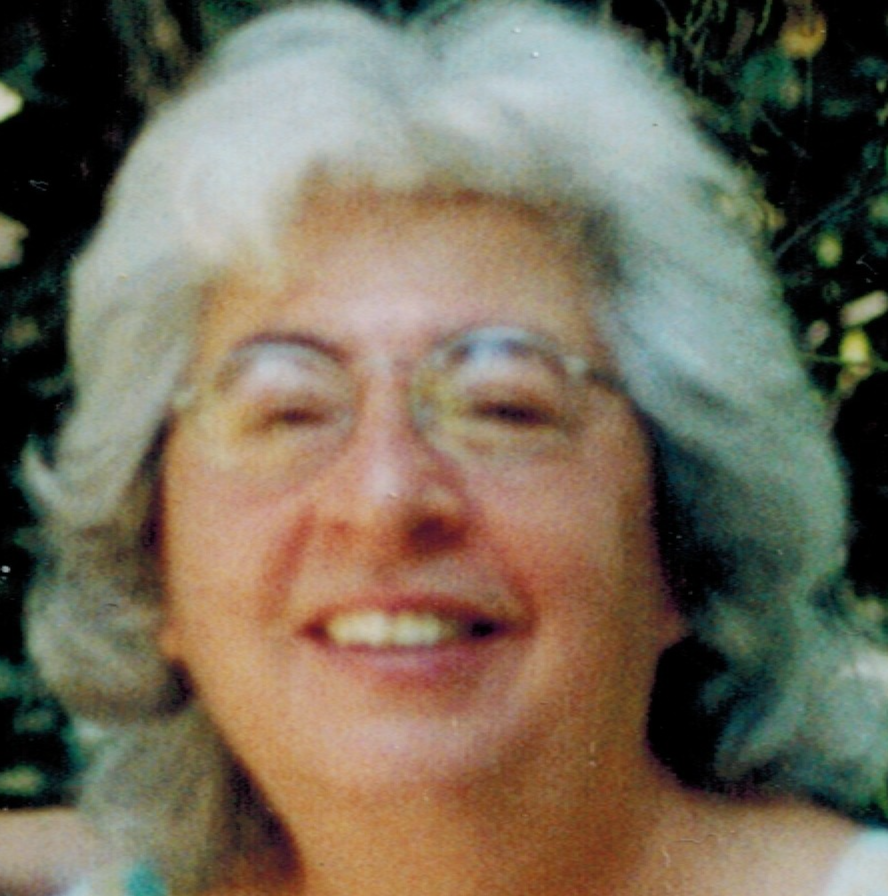
Ronnee Jaeger
The tour was the idea of Sam Blatt and his partner, the late Ronnee Jaeger, two members of UJPO (the United Jewish Peoples Order) in Toronto, a venerable 100-year old organization that celebrates Jewish culture, education, yiddishkeit and social justice. Most in our group had already visited virtually every Palestinian town and city in the West Bank, and Israel’s main cities on a tour with Sam and Ronnee. In most Israeli locales we met progressive Jews – activists who were against Israel’s illegal and brutal occupation of the West Bank and Gaza.
Sam Blatt
We met Amira Hass, a leading Ha’aretz journalist, Shir Hever a left-wing economist, representatives from Israeli peace groups like Breaking the Silence, Rabbis for Human Rights and joined a Women in Black vigil on a Friday afternoon in Jerusalem. Women in Black, a women’s anti-war movement with an estimated 10,000 activists around the world, started 38 years ago in support of the first Palestinian Intifada. We heard the myriad of cat calls, taunts and threats by Jewish drivers as they drove by our demonstration and were also called out by evangelical Christian Zionists. We met with politicians, activists – both Israeli and Palestinian. And we stayed one night with a Palestinian family in their home in the Aida Refugee Camp, near Bethlehem – so we could experience the terror of hearing Israeli jeeps roll through the camp all night to frighten the inhabitants.
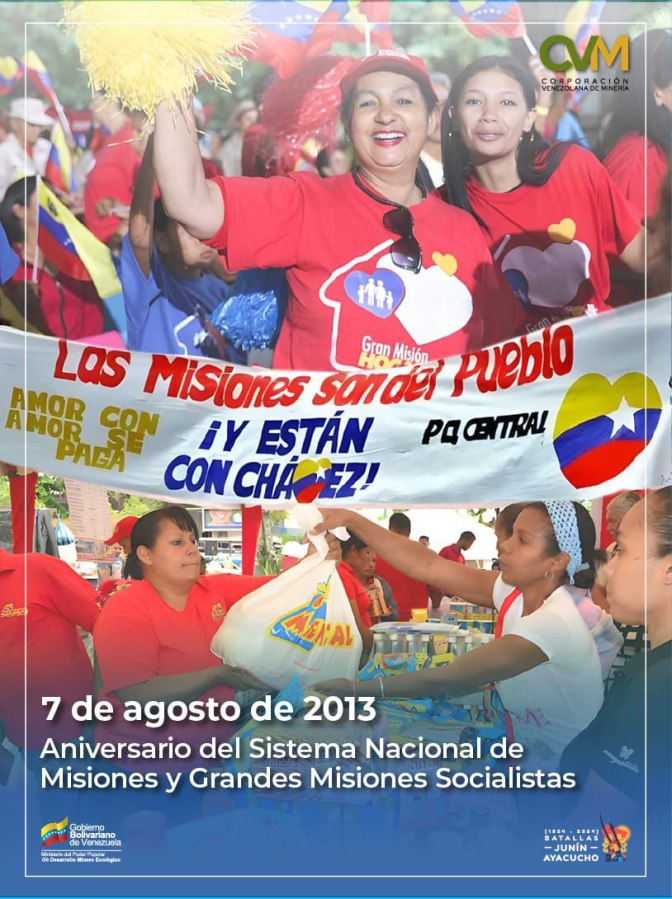
From Instagram: a celebration for Chavez, who died in March 2013, and the success of the Misiones. The banner reads: Missions are by the People and they are with Chavez; and love is repaid with love.
When the chance came up to visit Venezuela, on a tour organized by Sam and Ronnee, I jumped at it. Through an NGO (non-governmental organization), they hired a young university graduate who spoke good English, a driver and a van. We visited an opulent reception, an oneg shabbat, with some leading members of a Caracas synagogue. They told us that just about all their children had moved to the US, a smattering to the UK and France, and some moved to Israel in order to pursue education and basically leave the country. The Jewish community leaders told us no one trusted Chávez, as a socialist and an anti-imperialist, but they were waiting to perhaps have their children set them up in other countries before they left Venezuela permanently. Like many diaspora Jews of age 55 plus, the men were wealthy factory owners, or involved in the media or had lucrative professional lives. They looked well-off and said they represented the barely 4,000 Jews in the country.
Saturday’s news – after the bombings, the murders of 100 and kidnapping of Maduro and his wife– included this:
“Explosions near Jewish Neighbourhoods in the Venezuelan capital shook the dwindling Jewish Community as the US moved to capture President Nicolás Maduro: once 40,000 strrong, the Jewish population now numbers just 4,000… Many prayed for Maduro to fall.”
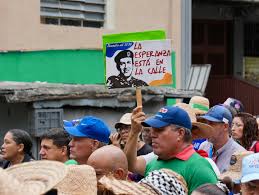
The sign carried by this Maduro supporter is “hope is in the streets.”
To understand Hugo Chávez, and his successor Nicolás Maduro, you have to look at a brief timeline in Venezuelan history:
Because of its unique situation with the largest oil reserves in the world, Venezuela has a long history of US imperialist involvement and an equally long “Yankee Go Home” record that predates Chávez,and Maduro.
1958: Richard Nixon takes a ‘friendship tour’ of Venezuela
In 1958, when then-US Vice-President Richard Nixon was on a “friendship tour” of South America, a large rally in Caracas attacked his motorcade.
“A large crowd of angry Venezuelans who shouted anti-American slogans stopped Nixon’s motorcade through the capital city. They attacked the car, damaged its body and smashed the windows. Inside the vehicle, Secret Service agents covered the vice president and at least one reportedly pulled out his weapon. Miraculously, they escaped from the crowd and sped away. In Washington, President Eisenhower dispatched U.S. troops to the Caribbean area to rescue Nixon from further threats if necessary. None occurred, and the vice president left Venezuela ahead of schedule.” From: This Day in Historyhere.
Chávez was elected in 1998 on an emphatically left-wing and anti-US agenda. Though Venezuela had nationalized most of its oil industry in 1976, in 2007 Chávez had run two of the last three US-run oil companies out of the country. Chevron stayed on.
In 2002, the US sanctioned a plot to overthrow Chávez. It lasted for 48 hours and ended when Chavistas filled the streets and military loyalists restored Chávez. More than 100 people died in the events over that two day period.
Returning to power, Chávez vowed to continue with his misiones and continue to strike at US imperialism.
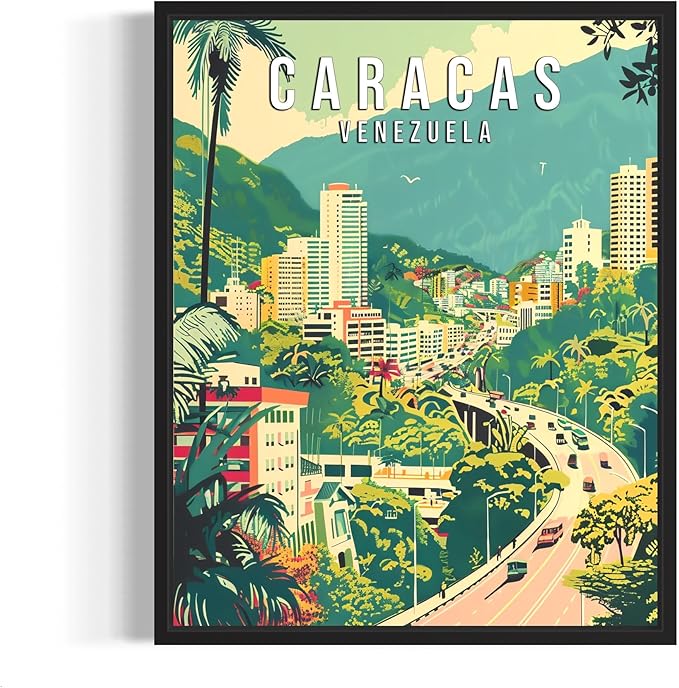
Vintage travel/tourism poster
Las Misiones: social programs with a difference
With increasing income from oil, the Chávez government rolled up its sleeves to reverse over 100 years of deliberate underdevelopment, building social programs, called LasMisiones Bolivarianas, inspired by the 19th century Simón Bolivar, an anti-imperialist, anti-colonial patriot and liberator. Action areas or objectives called misiones included:
Misión Barrio Adentro: free medical care
Misión Robinson; literacy and math programs for adults;
Misión Mercal: affordable food
Misión Vivienda Venezuela: home construction
Misión Hijos de Venezuela- help for children
Misión Cultura, Misión Ciencia, and other
Our group arrived in November 2012, a few months before Chávez’s death. We arrived to see a kind of miracle for people outside the two major cities. We saw new small schools, we met teachers, we saw an adult literacy class. We visited a new health centre in a small town and met a Cuban doctor and nurse serving there. We met a few outpatients and saw some waiting to be seen.
The literacy campaigns were taking root especially in the countryside. We met with some women training to be teachers, who were teaching adults at night as volunteers. Some university level classes were even held in smaller towns so the women could get their degrees.
We met with the minister of Indigenous rights, who explained what the government was doing to further them. We visited a government-run radio station, and another media outlet. We visited the fine arts museum and national gallery in Caracas.
In 2013, after Chávez, his lieutenant, Nicolás Maduro narrowly won the presidential election. At the same time the country’s economy was in a downward spiral, mainly due to hostile relations between the US and Venezuela. 2014-15 saw the US impose visa restrictions, and sanctions. As a result there were acute food and medicine shortages, high inflation and 6-8 million (depending on whom you ask) Venezuelans who had better means left the country in the last decade.
Election posters from the 2013 election that Maduro won.
We as tourists felt the socialist state, with its misiones was starting to unravel. We heard about increases in crime, in attacks and thefts especially in Caracas. We heard about favouritism, jobs saved for Chavistas, jailing of opponents and all kinds of corruption. Our guide, a young man of about 30 years old, was in a private war with the Chavistas – as those who supported Chávez were called. He felt tourism had been compromised as had any rapprochement with the US – both of which he favoured. He couldn’t understand our drive to build a socialist Canada, or to undermine the US empire. This was five years before the doomed and contested election—the one that the western world accused Maduros of hijacking. And five years before the US tried to leverage their opposition puppet, Juan Guiadó into the presidency. Where is he now by the way? He fled to the US in 2023.
No fentanyl labs in Venezuela
Now Maduro and his wife are locked in an American prison, no doubt for a very long time. We know the charges of narco-terrorism against him are totally bogus, really, since Trump just pardoned the former Honduran president, Juan Orlando Hernández. He was convicted in 2024 for drug trafficking and handed a 45-year sentence in a US jail. Even the NY Times noted Hernández had
“orchestrated a vast trafficking conspiracy that benefited drug cartels, even as Honduras grew poorer, more violent and more corrupt.”
Besides, there isn’t one fentanyl “lab” anywhere in Venezuela that produces the opioid– meaning no fentanyl comes from there or is exported from there.
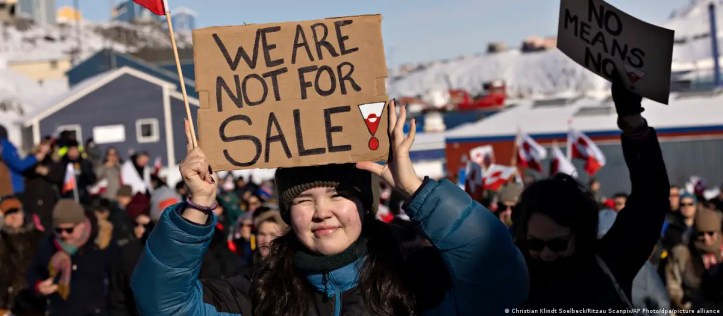
Taken at an anti-Trump protest in Nuuk, Greenland (credit: Christian Klindt Soelbeck/Ritzau Scanpix/AP Photo/dpa/picture alliance)
But the American media (and Canada’s) lead the way for the vilification of Maduro, and of his vice president, Delcy Rodriguez if she doesn’t cave to every one of Trump’s demands. In fact he has said Rodriguez ‘will face a situation worse than Maduro’ if she dares step out of line. It used to be that only the developing world would have to quake in its boots when US imperialism came knocking. Now Mexico and Colombia are on alert; Denmark is preparing for the worst.
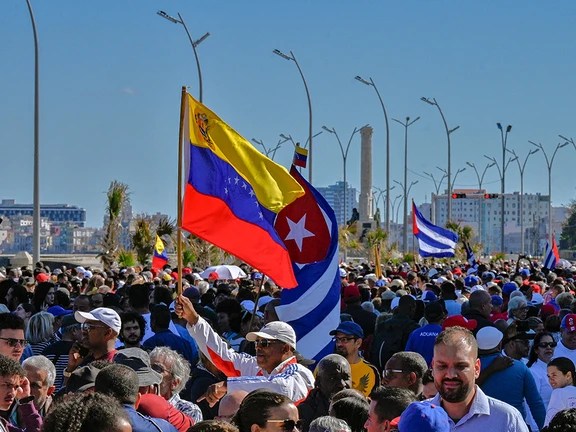
Photo at the Top: Cubans in Havana hold a Venezuelan national flag with a Cuban one during a rally in support of Venezuelan leader Nicolas Maduro, after U.S. forces kidnapped him and his wife, 3 Jan. 2026. (credit: ADALBERTO ROQUE/AFP via Getty Images)

 Another ruined dinner party...