Here’s a change for Nova Scotia.
Another declared holiday which is not a paid holiday for many – Truth and Reconciliation Day.
Indeed the federal government named today, also called Orange Shirt Day, as a paid statutory holiday for their own civil servants and federally regulated employees – workers at banks, the airlines, in broadcasting and at Canada Post (if they weren’t on strike).
Four provinces, New Brunswick, BC, PEI, Manitoba and three territories, Nunavut, Yukon, Northwest Territories have declared today a paid statutory holidays for nearly everyone who works in the province or territory.
Will you get paid for T&R Day?
But Nova Scotia, along with the five remaining laggard provinces, refuse to make it a general paid holiday. While provincial offices, public schools, universities and regulated childcare centres must close, they must pay employees for the holiday. However, no business or store has to be closed. It’s totally up to employers if they close, for how long, and whether their employees will get paid for the day off – or will be paid a holiday premium if they have to work.
Today we commemorate ten years since the 94 Calls to Action launched by Murray Sinclair and the Truth and Reconciliation Commission. Sinclair was Manitoba’s first Indigenous judge, a politician and a Canadian senator. Of the 94 Calls, 14 are complete, 42 are in progress, 22 stalled (!!) and 16 not yet begun.
Truth & Reconciliation: How to address the Miscarriage of Justice for two sisters
Today I’m thinking about the miscarriage of justice done to the Quewezance sisters, Odelia and Nerissa. Each woman was barely 20 years old when she was convicted of second degree murder in the killing of a 70-year-old white farmer, in Kamsack, Sask. In fact, their teenage male cousin admitted to the killing; all three teens lived on Keeseekoose First Nation near Kamsack. The teen also insisted the two sisters did not kill the man. The cousin was convicted as a youth, served time and was released years ago. But the two sisters have endured prison for their entire adult lives.
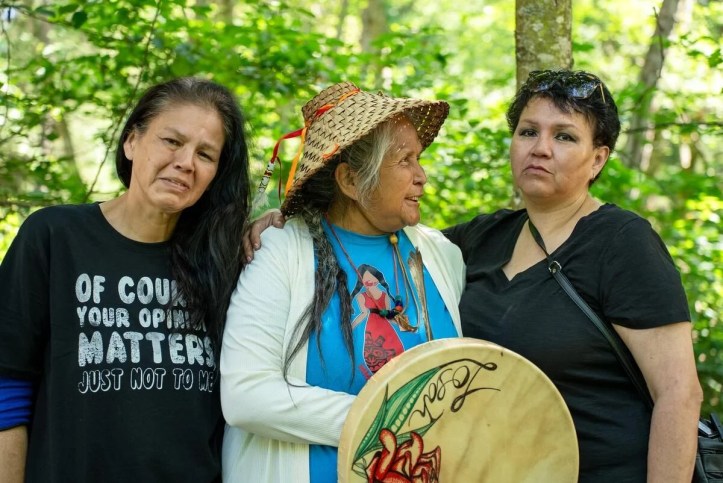
They served 24 years in prison, and the last six on parole. In 2022, Innocence Canada filed a request to the federal Minister of Justice to have their case reviewed and their murder convictions quashed The sisters were released pending the outcome of the review. I first wrote about them here.
“Odelia and Nerissa are the victims of a justice system plagued by racism and prejudice.”
Congress of Aboriginal Peoples National Chief Elmer St Pierre, 2023
But in the last two years, one of the sisters had her parole revoked as she had breached conditions – she had used drugs and failed to report to corrections’ officers. She had to return to prison, but after a legal fight, was released – and remains out on bail. Still no word on overturning their 1994 convictions.
“Odelia and Nerissa are the victims of a justice system plagued by racism and prejudice,” said Congress of Aboriginal Peoples National Chief Elmer St. Pierre in 2023. “The Saskatchewan government has spent 30 years repeatedly denying the sisters justice, so now they must be granted bail immediately.”
They are both out on parole now – after 24 years in jail, and six years on parole. The miscarriage of justice is shocking, but believable when one notes the grim statistics that 75% of prisoners in Saskatchewan’s provincial jails are Indigenous, and 65% of inmates in federal prisons are Indigenous. First Nations’ Inuit and Metis people represent five percent of Canada’s population.
Have a good Orange Shirt Day.
Above, watch a 51-minute video on the sisters from APTN.
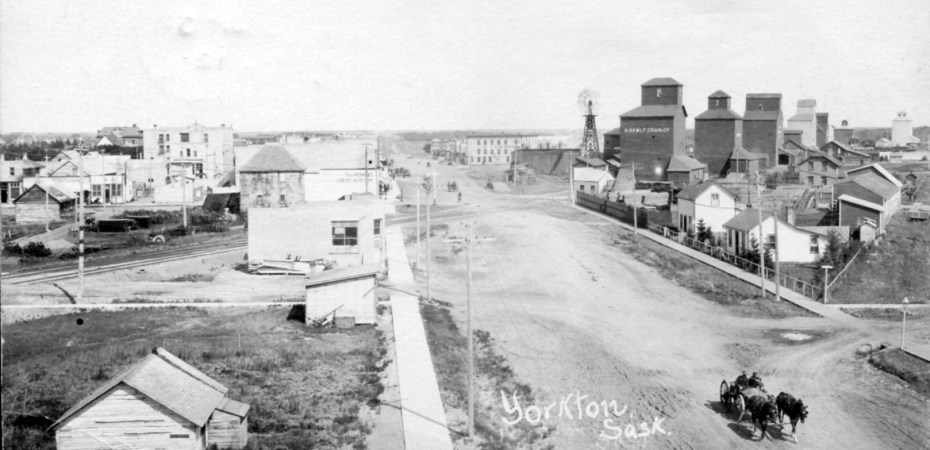
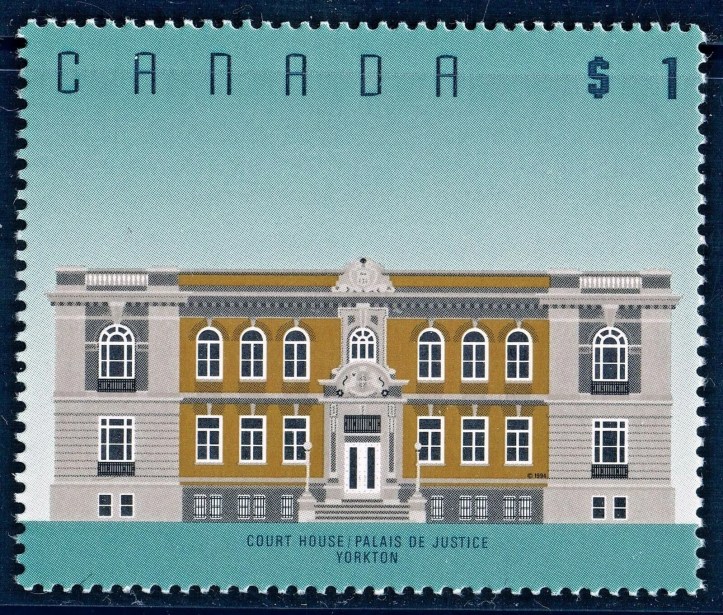
Photo at the Top: Yorkton, Saskatchewan 1912. The courthouse in Yorkton was where the bail hearings for the Quewezance women took place. Below, stamp to commemorate the courthouse architecture.
 Another ruined dinner party...