Adolescence is on Netflix. The reason to watch this four-part British dramatic series just out last month, is it combines the mystery and fear of child-murder with childhood. Incongruous as it sounds –it works. Each episode has a theme, for instance one is the arrest of the 13-year-old boy for murder. The final episode is about the boy’s family running errands on a Saturday. This is a riveting series. Everyone’s talking about it!!

Anora, which won the Academy Award for Best Picture in 2025, is worth seeing. Anora is a young woman who works as an escort in Brooklyn. Bored and frantic that her life is slipping away, she meets and within days marries the 20 year-old-son of a Russian oligarch. When the groom’s parents find out, they travel to New York to arrange to annul the marriage. Anora is actually a lot of fun, witty and quick. It’s on Amazon Prime.
There is a new season of Bosch: Legacy. On Prime you can watch a wooden, heavily tattooed 60-year-old ex-cop catch the bad guys that the LAPD can’t. I don’t recommend it, unless you like car chases, and the DA with a heart of gold, Honey Chandler.
The Residence, I didn’t like all that much. There were a few cute jokes and doubles entendres, but really the plot is plodding and predictable. The White House chief usher is found murdered with few clues as to the identity of the culprit. But suddenly everyone– from the pastry chef, to the chief of protocol, to a waitress from Louisiana– is a suspect. Actor Uzo Aduba plays Cordelia Cupp, a clever independent investigator, who will not just take no, or “I don’t know” for an answer. It’s on Netflix.
For a complete change, you need to immerse yourself in one or both versions of The Leopard (Il Gattopardo). The novel, published posthumously in 1958, has been celebrated as the national novel of Italy. On screen it is also glorious. I’ve read the novel by Italian writer Giuseppe Tomasi di Lampedusa which focuses on his grandfather, a rich Sicilian landowner Don Giulio Fabrizio Tomasi Lampedusa and his family during the unification of Italy or the Risorgimento in1860. The prince likes things as they are in Sicily, a rural society of wealthy landlords, trusting Catholic serfs and farm labourers. He becomes involved in local politics when, to his horror, his favourite nephew, Tancredi, joins the rebel Garibaldi and his liberators.
Here is the teaser for the current miniseries on Netflix. The 1963 film you can borrow from the library, or find online somewhere.
Below: scene from The Leopard 1963, Left to right: Claudia Cardinale, Burt Lancaster and Alain Delon. Book cover, movie poster and the Baroque Piazza Pretoria (credit: CJ Romas/Getty Images)


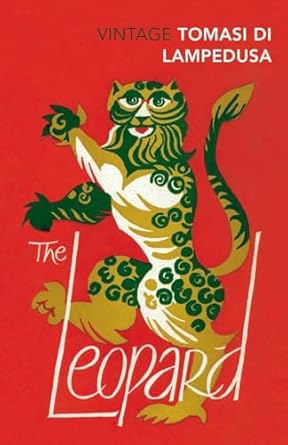
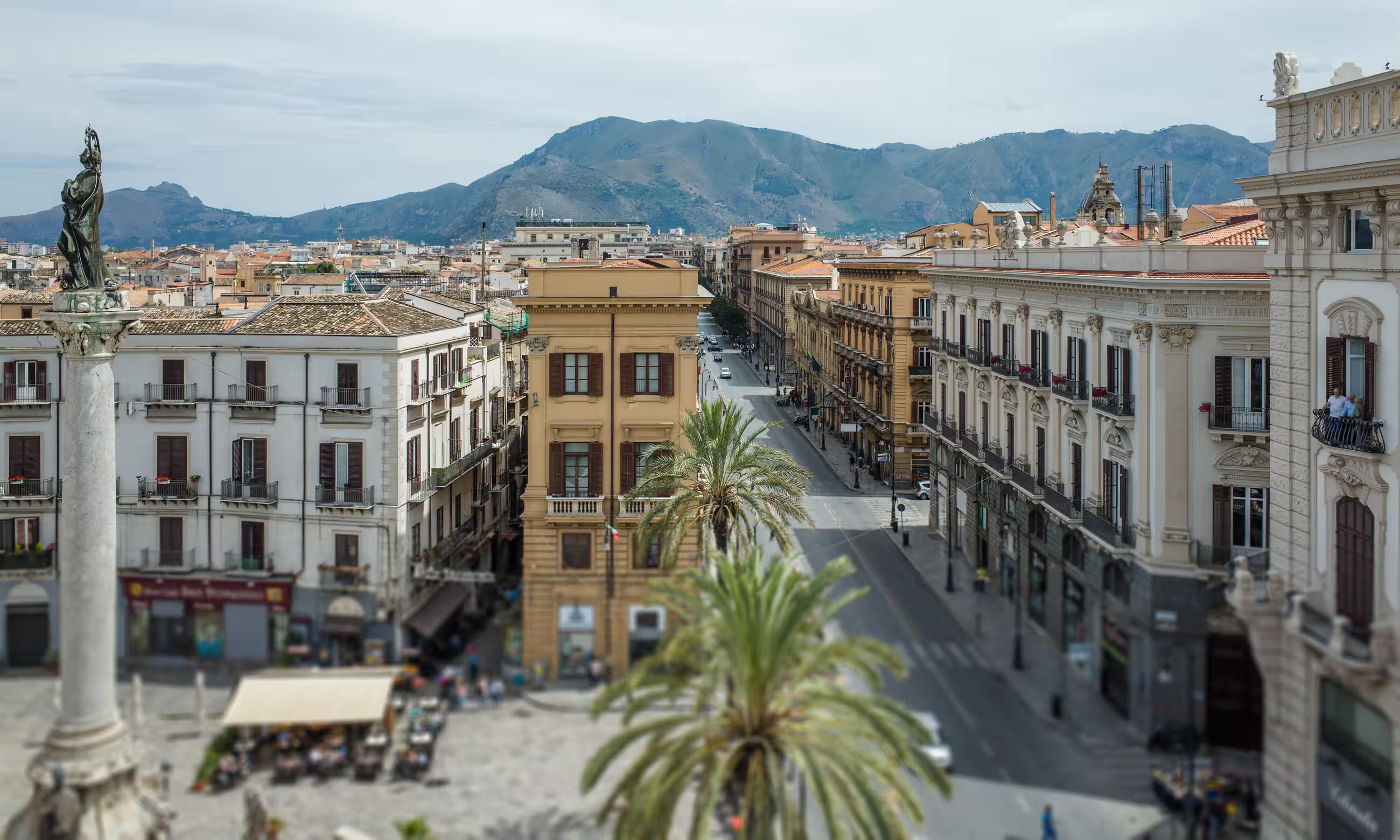
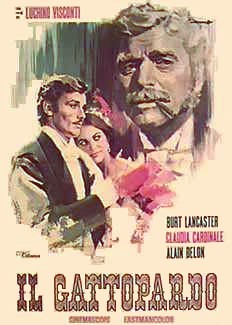
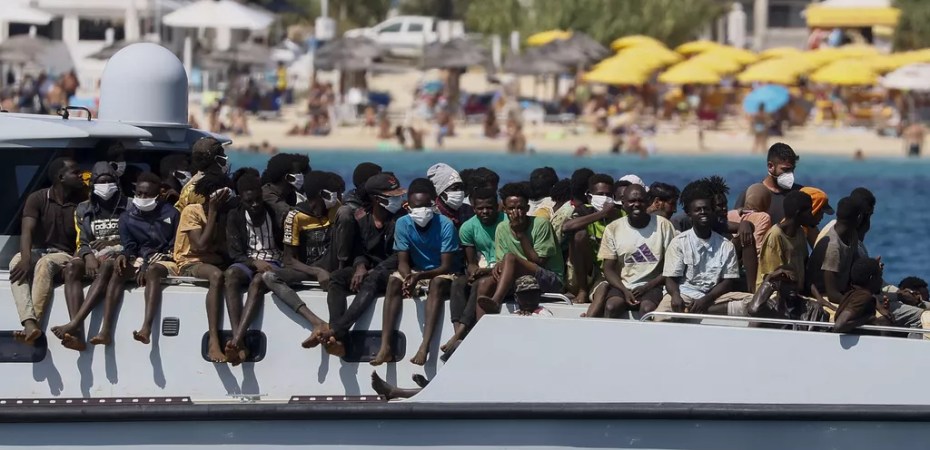
I prefer the depth and music in Luchino Visconti’s 1963 film to the miniseries released recently by Netflix. Visconti’s film won many accolades including the Palme D’Or at the Canne Film Festival 60 years ago. In 2012, The Guardian named The Leopard as one of “the 10 best historical novels”. Many readers will recognize the name Lampedusa – the small windswept island off Sicily. At one time it was “owned” by the prince’s family. Today thousands of migrants who against all odds survived the dangerous crossing from north Africa are interned in holding camps there. They are not permitted to leave Lampedusa to travel through Italy and the EU in search of better lives. Thousands more have been drowned just trying to get to Lampedusa.
In one of the best books I’ve read, The Naked Don’t Fear the Water (2023), and reviewed here, there is a description of life in these holding camps. The author, Matthieu Aikins, a Canadian who taught himself Dari (Afghanistan’s official language), posed as an Afghan refugee trying to get to western Europe. His account of his life, living among refugees, is excellent. Here’s my review.
Al Jazeera’s The Listening Post has two very good 24-minute documentaries here. The first is AI and Doxxing Sites: Trump vs antiwar activists. The second Gaza: Recording attacks as an act of resistance is here. As one scholar notes Israel’s targeting and murder of journalists in Gaza, and Israel’s refusal to allow any western media into Gaza over the last 18months, has hidden the reality: Israel has killed more journalists than in all western wars over 150 years combined.
Kids Under Fire
Al Jazeera’s Fault Lines has a good 25 minute documentary Kids Under Fire: An investigation into Israeli soldiers shooting children. It’s direct and to the point. What we realise now is what critic of Israel’s genocide and academic Norman Finklestein noted the Israelis have seen everything on their screens (as we have), the starving and murder of children, the dead children and adults lying on the streets, the record for the single most child amputees in history, and the utter destruction of a people — yet Israelis still deny what they are doing, or allowing their government to do — commit genocide.
On a lighter note, Netflix’s dramatic/comedy series Mo, about a Palestinian entrepreneur and his mother-led family living as refugees in Texas is well-worth watching. All of the episodes are cute, well-played and well-written. But the final episode, when Mo actually goes to visit relatives in the West Bank is political, edgy and yet still fun.

Got just about two minutes?
This 1.59 minute film is about an 13-year-old boy, Ahmad Manasra, who suffered a brain injury from being beaten during his arrest by the IDF. In early April, he was released after 10 years in an Israeli jail—much of it in solitary confinement. Not only has he developed serious mental illness; he was released many kilometres from his family “in a remote location several kilometers from the Israeli prison where he was held in the Naqab desert, where his family was waiting for him at the prison gate.” According to his lawyer, Ahmad Manasra was left alone, stranded, without a phone and was later found and recognized by a Bedouin family, who contacted his family.
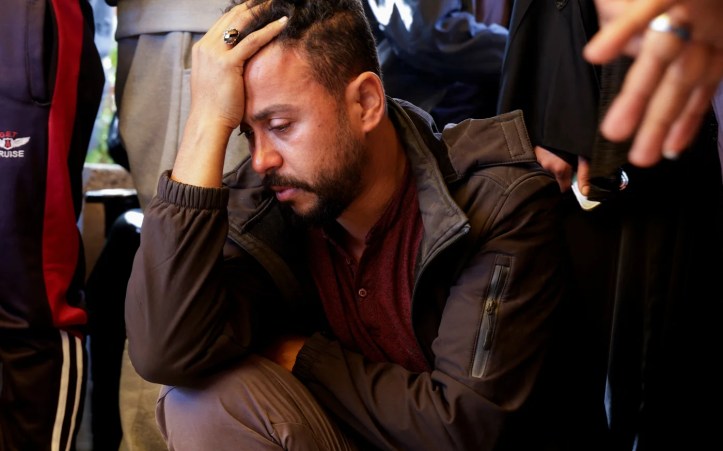
“The way Ahmad was released is a continuation of his psychological torture to the last minute,” a spokesperson for the Palestinian Mental Health Network who followed Manasra’s case told Mondoweiss. It also reported that
“In April 2022, a short Palestinian film featured the case of Ahmad Manasra as an example of the 105,000 “empty places” left behind by Palestine’s prisoners and martyrs. After Israel’s genocidal assault on Gaza, the pre-October 7 prison population nearly doubled.”
Death and the Maiden…
I watched the 1994 film, Death and the Maiden on Kanopy. Originally, it was a play written by Chilean-born author Ariel Dorfman. He witnessed the magic of the read-through of his play for the first time while in London UK, where it was produced for the stage. I really liked Dorfman’s latest novel The Suicide Museum – you can read my review of it here.

Death and the Maiden takes place in an unnamed South American country (a thinly veiled Chile): a man’s car breaks down. The man is a prominent civil liberties’ lawyer Gerardo Escobar; a good samaritan, physician Dr Miranda, offers Escobar a ride home. Once there, Escobar offers Miranda some hospitality as thanks for the drive. However, Escobar’s wife Paulina distrusts the doctor – soon we find out why. This is a murder mystery and also a finely crafted thriller about the aftermath of the Pinochet years. As background, you could read Audacity to Believe (1977) by Dr Sheila Cassidy. As a British doctor tending to the poor—and ultimately saving the life of a left activist in 1973– Cassidy was imprisoned and tortured in Pinochet’s Chile.
Here’s the trailer for Death and the Maiden.
Woman of the Dead (2022) is moderately interesting six-part series you can watch on Netflix. Made in the Tyrolean Alps of Austria, it is a whodunit (of course) that takes place near a ski resort. One dead body is indeed discovered draped over a ski lift-chair. A family with two nice kids live in a house attached to the local funeral parlour. The family’s mother/wife is an undertaker; her husband is a local policeman who gets killed, hit by a car on the street just outside their home/funeral parlour. The wife, a calculating woman, who is not squeamish around the dead (or even the odd murder), decides to find out who killed her husband and why. And she stops at nothing to do it!
What to Read…
A short novel by Joyce Carol Oates, Patricide, is a good read. A top administrator at an ivy-league university on the eastern seaboard adores her father, a Nobel-prize winning novelist. She hates and loves him – does she hate him enough to arrange an accident to happen to him? Throughout Patricide the reader wants to know what happened and Oates toys with us. This book is delightful – and turns out not in the way you think. Better!!
David Bezmozgis’ short story “From, To” in the 6 Apr. issue of The New Yorker is wonderful. As usual he focuses on Russian Jews who emigrated to Toronto starting in the 1970s. In this short story, a 50-year-old real estate lawyer, Vadik, has just lost his mother not long after 7 Oct 2023. Of course she too had once lived in the former Soviet Union in the aftermath of its destruction by the Germans during WWII. But she raised Vadik in Toronto; he was her only child, and his two daughters—her granddaughters — were precious to her. Like many Jews in Canada, he and his mother supported Israel in its wars on Gaza. But now with her death, Vadik has to reconcile his and his mother’s right-wing views about Israel’s genocide with the fact that his own 18-year-old daughter Mila lives in the pro-Palestine encampment at her downtown university. This is a vibrant and knowing short story. Don’t miss it. You can listen to it here or read it.
Last week The Guardian ran a good article by two Canadian thinkers, Naomi Klein and Astra Taylor called “The Rise of End Times Fascism“.
Events seem to be overtaking us in an article in the January issue of The Walrus — “Pay Tuition; Follow the Rules, Then Pack Your Bags” by Alyanna Denise Chua. She followed Paulo Moura, a graphic designer who came to Canada seven years ago from Brazil to study at a college just outside Toronto. His course ended; he got a few good jobs but has not been able to get permanent residency. His situation isn’t unusual. The problem now is compounded by the bleating of the Liberals and the Tories together – to limit immigration –especially student visas—as the way to fight the housing crisis!
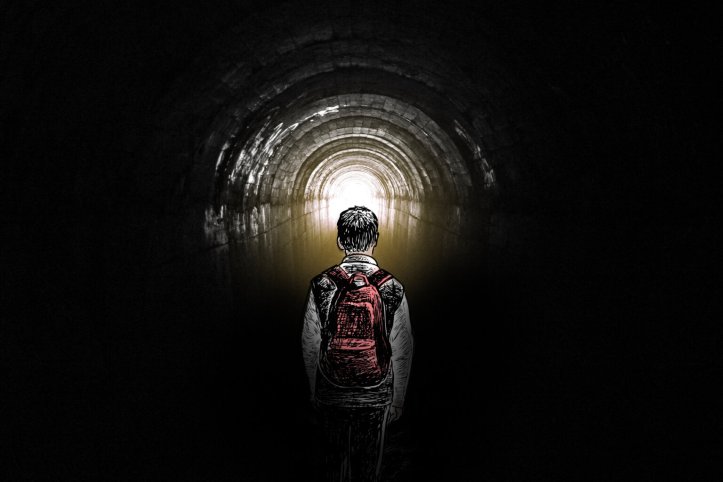
Vijay Prashad, an excellent researcher, academic and writer, wrote “Barack Obama’s First Drone Strike” Most people do not know that
“For the past quarter century, ever since 2001, presidents of the United States inaugurate their terms not with bottles of champagne but with drone and missile strikes. Donald Trump followed the rhythm. Not long after he ascended to the chair in the Oval Office, he sent off missiles against ISIS fighters “hiding in caves” – as he put it on social media – in the Golis mountains in northeast Somalia. No civilians were killed, said Trump. They always say that.”
The article details three days after Obama was sworn in as president in 2009, when he “didn’t object” to the US sending a drone loaded with three Hellfire missiles to kill 15 innocent villagers in remote Waziristan. Fourteen children were left with no fathers. Not one murdered man was connected to Al Qaeda or the Taliban. Of course Obama worried about the kills and the children.

But not enough to compensate the victims, or even apologize.
Nor did he change his behaviour:
“In 2010, Obama’s team developed the Disposition Matrix or the “kill list” and the procedures to activate the use of strikes to kill or capture “high value targets.””
The article tells what many don’t want to hear about the first Black US president.
For something very different and funny, read the short piece of nonfiction in Chatelaine “What I Learned from Condescending Customers as a Chain Restaurant Server,” by writer Chantal Braganza.
Watching a Triple Murder Trial: in real time
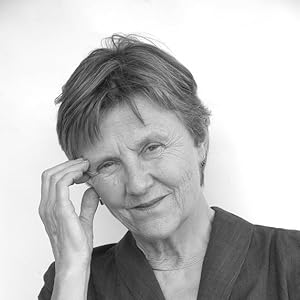
The other week I discovered on a podcast reference to one of Australia’s top novelists– Helen Garner. Of course in Canada, we have not heard of her, as Australians may not have heard about our top women writers (Margaret Atwood excepted). I felt a bit of a kindred spirit when I read that in 1972, she was fired from her job as a high school teacher when she answered students’ questions about sex. In 1968, I had led the first high school student sit-in in Canada. I and two more kids were fired (expelled from school) for asking for an after-school Marxist study group! After a week-long student sit-in (most of the high school’s students sat in or didn’t attend classes) we won our demands. But a fired Garner, with no income, started to write freelance to make a living. That must have catapulted her into a successful career of writing books.
I decided to read one of her books This House of Grief: the story of a murder trial (2014) – a nonfiction account of a working class man’s trial for the triple drownings of his own three young sons. This is a kind of journalism we don’t see often. Every day for months Garner showed up to the trial, along with a teenage girl who was also interested in the trial. Garner sees a lot in the courtroom, she hears the nasty jokes from the lawyers, she sees how the police always doubted that it was an accident, and she sees how the police illegally coached their only witness. Little Garner writes is predictable or a palliative. Fascinating.


Podcasts to Listen to…
The Guardian long read “My Mother, the Racist” is brilliant. Writer Didier Eribon writes about growing up in a small town in France and the shame he endured about his mother’s hatred of minorities. As her son points out,
“She spent her life in northern France doing exhausting, back-breaking work – and yet she turned her anger against people who had done no wrongs to her. But as much as I couldn’t stand her rants, I was forced to accept her as she was communism and a racist mother.”
You can listen to it here and it’s incredibly interesting and well done, or you can read it here for yourself.
Me, myself and I
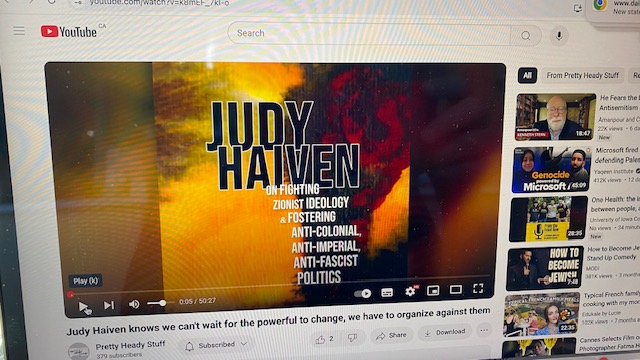
If you’d like to know more about me, my politics and activism, perhaps, you can listen to this podcast Pretty Heady Stuff. Scott Stoneman, a researcher and writer, interviewed me and boiled the interview down to 50 min. You can decide how much you actually want to listen to!
White Supremacist Terrorgram Network allegedly inspired teen accused of killing parents sand planning Trump assassination
ProPublica article, March. 2025
ProPublica a non-profit journal exposes a right-wing (fascist) network in the US. Listen to the podcast or read all about white supremacism and the Terrorgram Network here.
The most important 5 or 7 minutes of news you will hear nowhere else is Headlines from Nora Loreto, who is part of Sandy and Nora Talk Politics. Sign up to receive it free every morning. Listen to episodes here.

The ongoing genocide in Gaza, though often mentioned in the Canadian media, is often pro-Israel or at least dismisses or is biased against the Palestinians. Redeye podcast host Jane Williams from Vancouver Co-op Radio interviews Lynn Naji a media analyst from Canadians for Justice and Peace in the Middle East about “challenging the media bias against Palestinians” and what we each can do. This is a good 15-minute podcast, listen here.
Photo at the top: Migrants on the deck of an Italian coastguard vessel as they are taken to camps on Lampedusa. (©AfricaNews.com: Cecilia Fabiano/LaPresse) Read more about it here.
 Another ruined dinner party...
[…] This is a story that was really started in the famous early 20th century novel, The Leopard (which I reviewed here). The Leopard celebrated the uniting of fifedoms to create a modern Italy and the demise of the […]
LikeLike