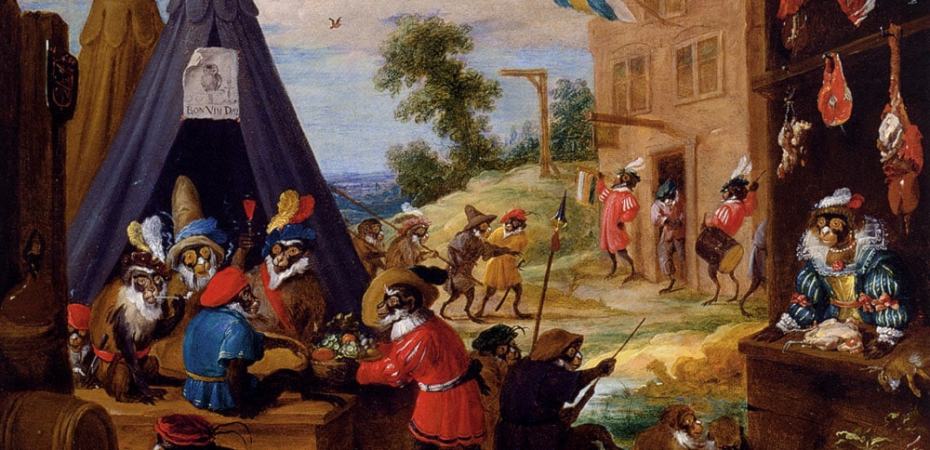
The Art Thief: The True Story of Love, Crime and a Dangerous Obsession by Michael Finkel is a must read for anyone interested in “great” art, and grand larceny. Stéphane Breitwieser, a French art lover, stole scores of paintings, sculptures and more from great art museums and lesser known ones across France, Belgium and Switzerland. How he did it is astounding – basically he used little more than an exacto-knife, his then-girlfriend as a lookout and his mother who covered for him. The value of his collection was between $1.4 and $2 billion. Why he did it – and where he stored it –are fascinating pieces of a puzzle. A must read. The CBC has a nice article about the art thief here, as does this piece in The New Yorker here.
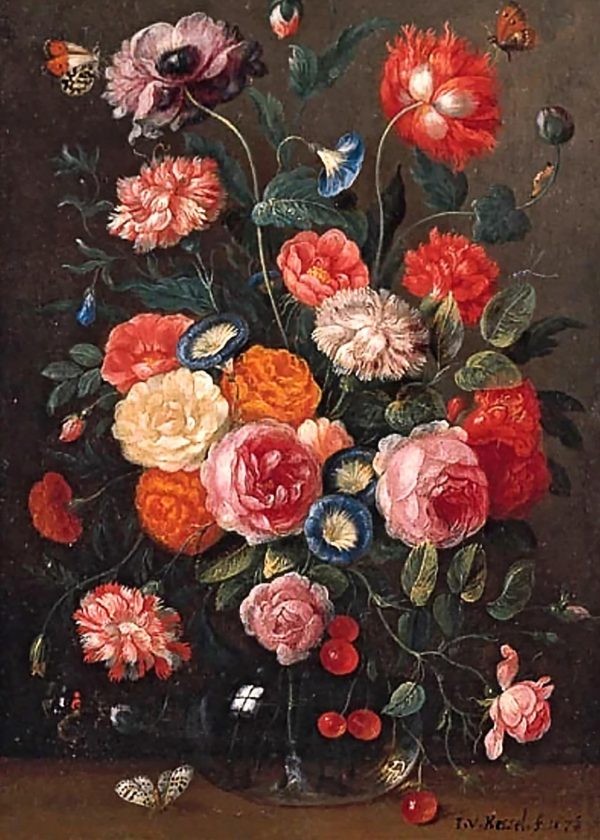
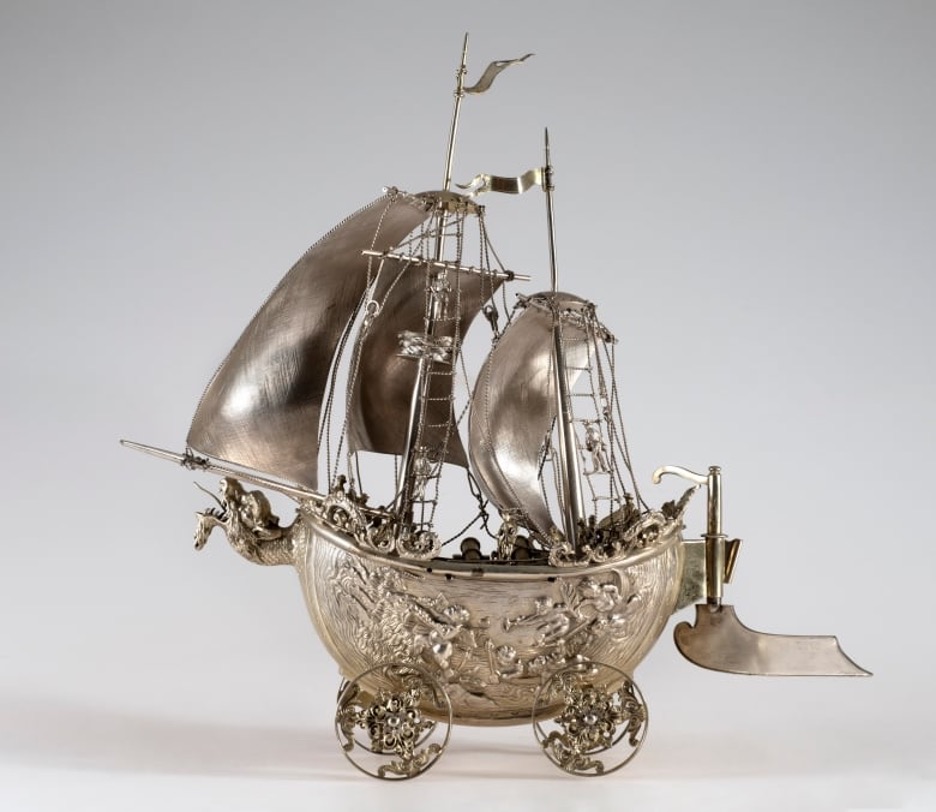
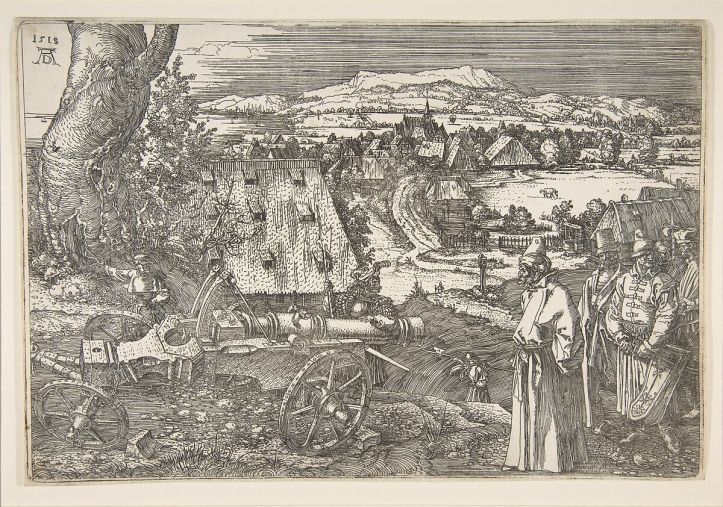
Some of the art Breitwieser stole: Sleeping Shepherd, by Francois Boucher (n.d.); Silver War Ship c. 1700; The Apothecary by Willem van Mieris (1714); Landscape with Cannon by Albrecht Durer (1518); Still Life by Jan van Kessel the Elder (n.d.);


Two Canadian women economists explore why it is women with children consistently earn less than men. The motherhood pay gap: “Why women’s earnings decline after having children” is an engaging article. And it’s here in The Conversation.
The best article this month is in The Walrus. Conrad Sweatman’s “Was the Winnipeg Art Gallery Led by a Nazi?” is a shocking and bittersweet read. From 1950 to the early 1970s, the Winnipeg Art Gallery’s (WAG) director extraordinaire Ferdinand Eckhardt upgraded and put the WAG on the map, as it were. Eckhardt and his wife, the famous and loved classical music composer Sophie-Carmen Eckhardt-Gramatte were a legendary couple in the Canadian arts scene. They were also quite likely Nazis. This is a well-written and fascinating investigation into who the couple were, their background, and what they were doing in Canada– post WWII. You can read it here or better still subscribe to The Walrus!

“In the Shadow of the Holocaust: how the politics of memory in Europe obscures what we see in Israel and Gaza today” by Masha Gessen is very much worth reading, especially now. In it she examines how the long shadow of the Holocaust is influencing culture, politics and civic behaviour in modern day Germany. And the very act of taking a stance in favour of Palestinians, or even mild discussion on Gaza can carry serious consequences or indeed prosecution by the state. From her article in The New Yorker here, Gessen speaks of her visit to the Jewish Museum in Berlin – which I too have visited. Gessen writes:
“There, an installation by the Israeli artist Menashe Kadishman, titled “Fallen Leaves,” consists of more than ten thousand rounds of iron with eyes and mouths cut into them, like casts of children’s drawings of screaming faces. When you walk on the faces, they clank, like shackles, or like the bolt handle of a rifle. Kadishman dedicated the work to victims of the Holocaust and other innocent victims of war and violence. I don’t know what Kadishman, who died in 2015, would have said about the current conflict. But, after I walked from the haunting video of Kibbutz Be’eri to the clanking iron faces, I thought of the thousands of residents of Gaza killed in retaliation for the lives of Jews killed by Hamas. Then I thought that, if I were to state this publicly in Germany, I might get in trouble.”
The article shows that in Germany, memory of the Holocaust cannot be “sullied” or diminished by discussion or debate about the genocide in Gaza.
“My family is being killed on my dime.”
Laila El-Haddad, a Palestinian-American. Recently the US gave Israel $14 billion, in addition to the $4 billion annnually.
In Gessen’s later article “The Limits of Accusing Israel of Genocide” (published on 7 Feb 2024) she compares what happened in the ICJ (International Court of Justice) to what happened at the same time in a federal courtroom in Oakland, CA. The US court heard three hours of horrifying testimony by witnesses from the non-governmental organization (NGO), Defense for Children International-Palestine. The court case was that Joe Biden’s administration is violating the Genocide Convention by supplying weapons used by the IDF to kill people in Gaza. A Palestinian-American writer, Laila El-Haddad, testified, “My family is being killed, on my dime.”
She explained that five people on her father’s side of the family and 84 on her mother’s side have died since 7 Oct. Several dozen more were not accounted for since the beginning of the war, she said. Gessen is a great writer and a masterful story teller. Well worth reading. Here it is.
It Should Be Easy to Fix
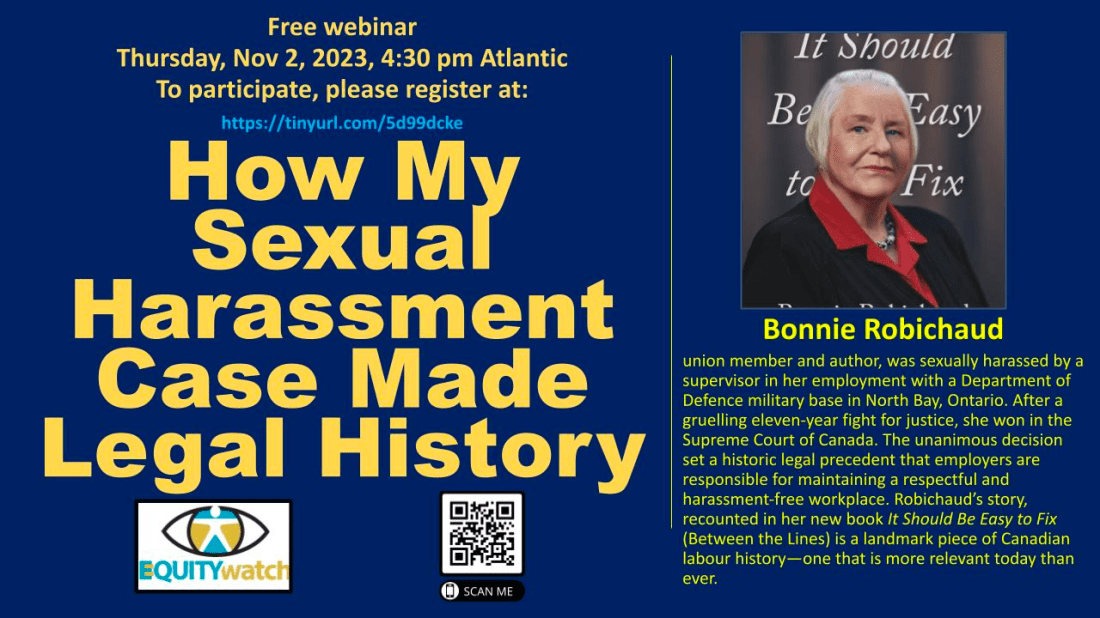
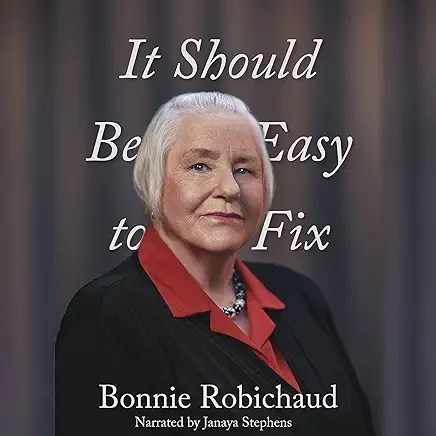
It Should Be Easy to Fix by Bonnie Robichaud (2022) is a good read. As some of you will recall, in 1987 Robichaud was the first woman to win her case against Canada’s Dept of National Defence and the federal government because she suffered sexual harassment at work. Employed as a cleaner at a Canadian Forces base in North Bay, Ont., she was harassed and sexually assaulted by her boss for years. With five young children to support, she needed desperately to keep her job. She first went to management – which refused to take her complaint seriously; then she went to her union which also pushed her away. One union rep did support her in her 11-year battle. Her case ended up in the Supreme Court of Canada (SCC). Eventually her union, PSAC (the Public Service Alliance of Canada) did support her battle. The SCC created a new legal precedent: that employers are responsible for maintaining a safe, respectful and harassment free workplace.
As Robichaud said,
“The system is designed for women not to win, but I broke through that system. At times it’s still difficult. People say, ‘Put it behind you!’ But it’ll never be behind me. And I’m sure there are a lot of women who will never leave it behind them. I decided that writing a book was really important because if we don’t write our history, then it won’t be written,”
– from Robichaud’s speech at the Workers History Museum in Ottawa
In Equity Watch, we had the pleasure of hearing Robichaud tell her story and answer questions at one of our monthly webinars. To watch a recording of this webinar, click HERE
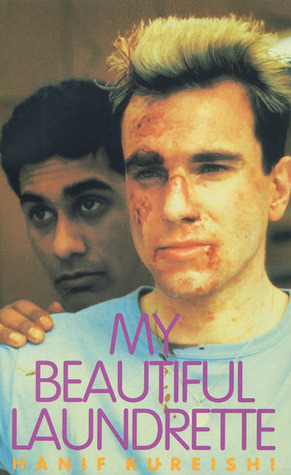
Hanif Kureishi used to be widely known for his satire, his wit, his excellent fiction, nonfiction and films — such as My Beautiful Laundrette. Stuart Hall, the late Jamaican-born British Marxist sociologist, cultural theorist, and political activist described it as “one of the most riveting and important films produced by a black writer in recent years.” A tragic accident in Rome two years ago rendered Kureishi totally paralysed; he says he now drinks wine through a straw. Kureishi has a thoughtful blog The Kureishi Chronicles; it’s free– but I subscribe because he needs money. His short story A Billionaire Comes to Supper here is excellent. It is about a young couple who work as music teachers in London who discover their middle-aged, kindly and diligent guitar student is a billionaire.
Coldtype is a leftwing British online magazine with a wide range of clever articles. The January issue here has a nice tribute to the recently deceased filmmaker and journalist John Pilger, and several worthwhile articles on Gaza. My favourite article Freefalling into a Shuttered Society is by Richard Ward. It’s about Ward’s daily walk to and from his local Walgreen’s pharmacy in his suburb in a city in New Mexico. The surveillance now inside and outside the store due to shoplifting of essentials by people who have to live on the streets– makes him furious.
Maestro: let it be the death of the biopic
Another left wing online magazine, Jacobin, (in the US) has a great article and review about Maestro, the new film about Leonard Bernstein. In “Let Bradley Cooper’s Maestro Be the Death of the Biopic” writer Eileen Jones questions much about the film, and erases any ‘nice’ touches the film presents. Apparently producers Martin Scorcese and Steven Spielberg included the three Bernstein children in the conception, writing and making of the film. As Jones says,
What’s the point of making all these biopics when obfuscating the most interesting aspects of people’s lives seems built into the genre?
“But damn, I resent being tear-jerked when the movie’s as lacking in honesty, complexity, and maturity as this one is.”
Eileen Jones in Jacobin
And many parts of Bernstein(and his wife Felicia Montealegre’s) lives are not seen. He and she were left wing activists and raised money for progressive causes. He was a Jew, and she a Catholic, at a time when mixed marriages were not in vogue. His sexual relationships with men started before he and Felicia married, during and then after their marriage ended – in the early death of Felicia.
I agree with Jones’ who makes this final point, “But damn, I resent being tear-jerked when the movie’s as lacking in honesty, complexity, and maturity as this one is.”
Of course Maestro was nominated for seven Oscars – including for best makeup and hairstyling.
Emma Paling writing in The Breach writes about how the CBC refers differently to killings of Israelis versus those of Palestinians. Read this article “CBC Says Killing of Palestinians doesn’t merit terms ‘murderous’, ‘brutal’“. Here.
More reviews of John Grisham books…
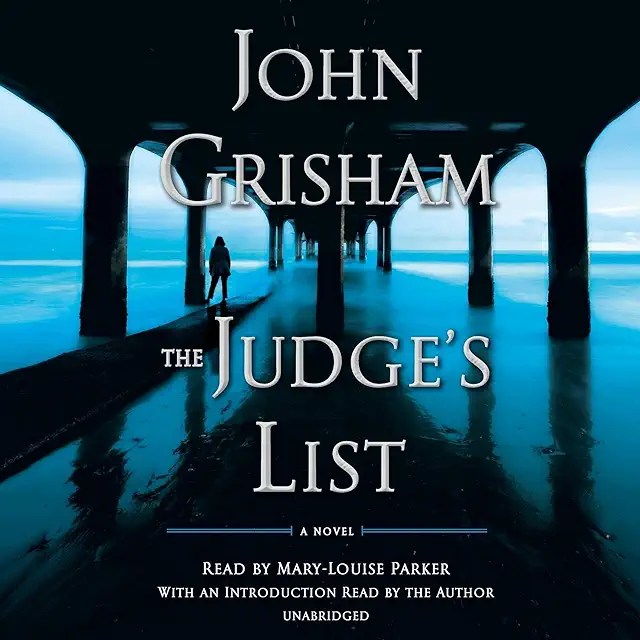
Owing to how impossible serious reading (and writing) is when caught up in the worry about genocide in Gaza, I’m reading long novels that have little to recommend them—except they allow me to fall asleep more quickly– sometimes. The best John Grisham novel I read this month is The Judge’s List. A nice legal thriller, it is about a respected judge in Florida’s panhandle who turns to murdering random people because they slighted him—not recently but years ago. Not just one or two, but eight people he’s killed (with his bare hands!) over a 20-year reign of terror. The reason for the each killing is different; in one case, he was humiliated by a girlfriend who laughed at his sexual prowess; then he was angry at a handyman who, in an argument, pulled a gun on him; in a third, he lost a debate in a classroom at law school. On average the murders happened five to ten years after the slight—so the police cannot link the cases, or the timeframes, or anything else. As usual, the female characters are a bit wooden and often goody-two shoes.

I also finished John Grisham’s Camino Island. It’s about a ring of thieves who steal rare books to sell to wealthy collectors. It’s more interesting than The Judge’s List, because the missing manuscript is F Scott Fitzgerald’s The Great Gatsby which is stored securely at Princeton University’s Firestone Library. That much is true. In the novel, a rare book dealer in the Florida Keys becomes a target for the thieves and for the FBI. But he turns everything sideways. Not bad at all.
Promod Puri is a blogger in Vancouver. His post What do your Blood Test Results Mean? is an eye-opener. He asks a toxicologist to explain and interpret them for us. Read about it here.
What to Watch
Last month, Cindy Ali was found not guilty of murdering her 16-year-old disabled daughter, Cynara. This was Ali’s second trial; the first in 2015 found her guilty of first degree murder and sent her to jail for life. It all started on a February morning in 2011 when Ali, married mother of four daughters, opened the front door of her Scarborough townhouse to two armed men who demanded a “package”. She had no idea what they were talking about; she was home caring for her seriously disabled daughter. Leaving Cynara cowering on the couch with a man pointing a gun at her, Ali took the other intruder through the house to show there was no money and no package. When she returned to the living room, she saw her daughter was not breathing. Cynara died in the hospital two days later. That was enough “evidence” for the police to arrest Ali for her daughter’s murder. You can read this report by the CBC here. The filmmaker behind the excellent CBC film Cynara (free on GEM) believes there was bias against disability, the fact the family were immigrants from Trinidad, and racism. There was prejudice against the family’s socio-economic status also at play in Ali’s conviction. Her appeal was heard in Oct. 2023. Three months later, she was fully exonerated. The film was made after she was found guilty and it convinces the viewer of her innocence. You can watch it on CBC-GEM.
Saving Bea is a brilliant TV series made by renowned Québec filmmaker Denys Arcand. The series spans a few years so there are plenty of one hour episodes. Start watching at the beginning. Dr Béatrice Clément is a 48-year-old emergency department doctor at a busy Montréal hospital. She is also the co-director of the department. She starts to have panic attacks, and is referred to a psychologist. The episodes are interspersed by her sometimes truculent, and smug responses to her therapist, and her refusal to clearly examine her past. This series has great acting, a decent plot and the spirit, intimacy and drive I’ve noticed in films from Québec. There is nothing showy or American about this series. It moves quickly and will capture your attention for weeks. I’m still watching!! It’s on Netflix, with English subtitles. You can read a detailed review here.

The Breach has a three minute (!) film about Canadian doctors returning from serving in Gaza. They say there is a war on the children of Gaza. Watch it here:
What to Listen to…
You can listen to “Why is generation Z so divided on gender?” In the podcast Full Story, by The Guardian in Australia. I thought it was good. And it’s here
The Big Story Podcast features “Can a prescription cure loneliness and isolation?” It’s a good episode here.

The best podcast series I’ve heard lately is Aaron Hernandez: A Football Tragedy. I’m not football (or sports) fan, but this podcast is clever, quick-witted and unforgettable. Hernandez, a professional US footballer hanged himself in 2017 at the age of 27. He was serving a life sentence for murder. How did a guy with a fantastic career, lots of money, a glamorous life, a young daughter and an adoring family, end up hanging in a cell? This series is worth listening to. Spellbinding. It’s on Wondery and you can listen here.
I listened to a great long interview “The German Question” with journalist Emily Dische-Becker on The Dig. It is about what is going on in Germany today – why is the pro-Palestine movement in the crosshairs of the state? Why are voices of Palestinians and their sympathizers silenced and outlawed– notably in Berlin? This is very topical and worth listening to. It’s more than two hours long but if you take a walk, or go to the gym or lie on your couch – you can listen. Fascinating. It’s here.

Naomi Klein gives a great talk on The Guardian’s Long Read, “We have a tool to stop Israel’s war crimes: BDS.” This is the one tool that is not violent, that is not vicious and that can work. Remember how boycotts worked in South Africa decades ago? Here is her long read—it’s only 35 minutes.
Finally, three great short stories about marriage are read delightfully by actors in this episode of Selected Shorts. You can listen to “A World without Selfie Sticks,” by Etgar Keret; “On Honeymoon”, by Javier Marias and finally “The Cult in My Garage” by Duncan Birmingham. My favourite was The Cult in My Garage. The program runs for an hour but you can listen to one tale at a time. Delightful. Here it is.
Painting at the top: A Festival of Monkeys, by David Teniers the Younger (1633). Another fabulous painting that Stéphane Breitwieser stole just because he loved it.
Today’s map: Gaza vs. 3 Canadian cities
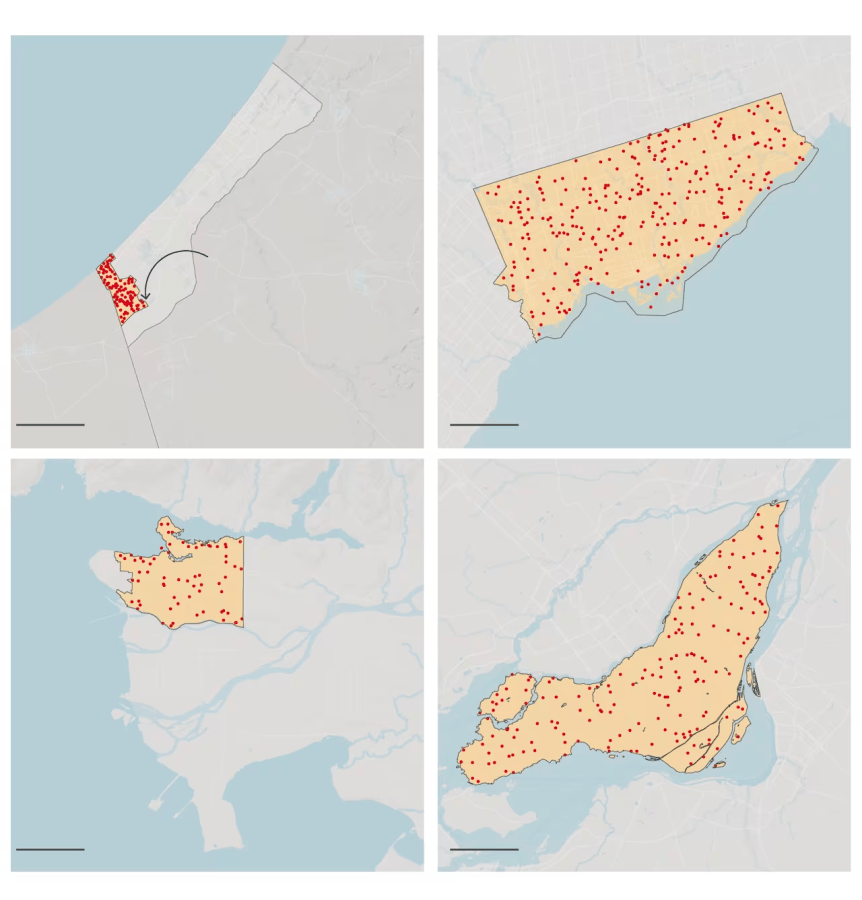
Each dot represents 10,000 people. Top Left: Rafah, pop. 1 million, 64 square km; top right: Toronto, pop. 2.9 million, 641 sq km; bottom left: Vancouver pop. 675,000, 115 sq km. Bottom right: Montreal, pop. 1.7 million, 365 sq km. See the original article and OECD maps here.
Ars Gratia Artis (Art for the sake of Art)
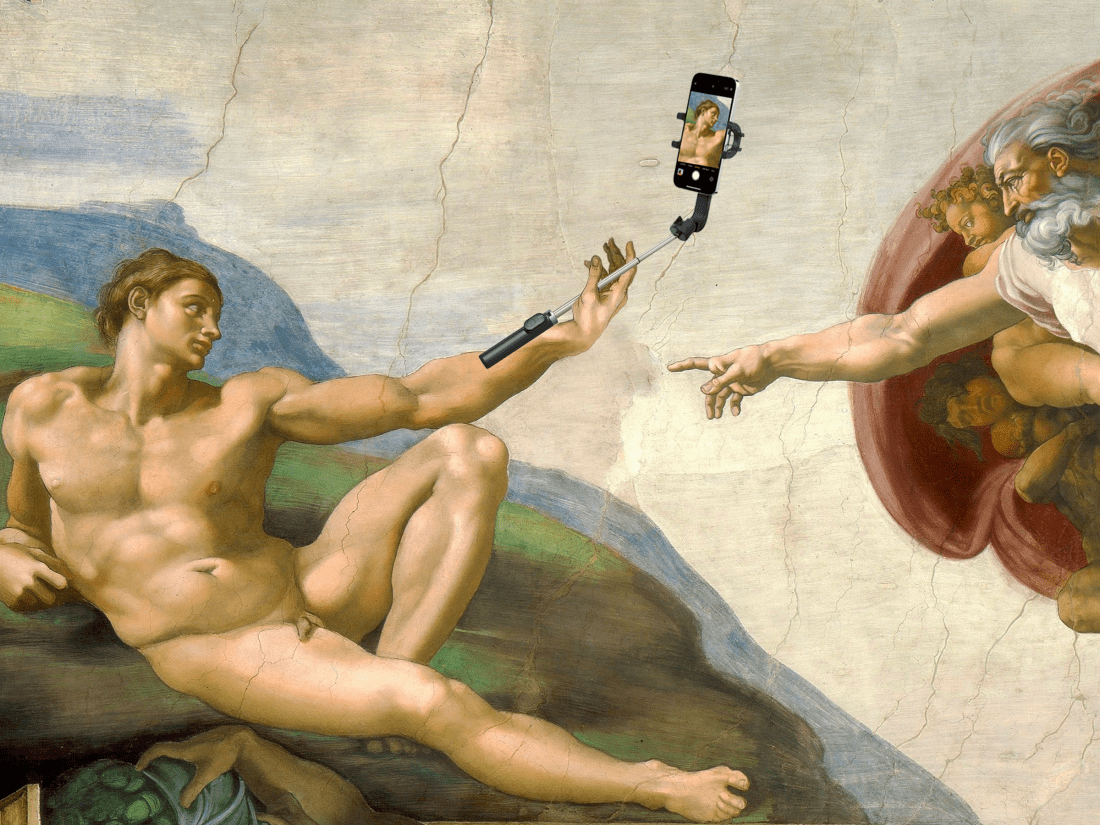
Read on here Above: “God, please, can’t you see I’m busy right now?” (edit by Valentina Di Liscia/Hyperallergic) after the painting The Creation of Adam, by Michelangelo (1512)
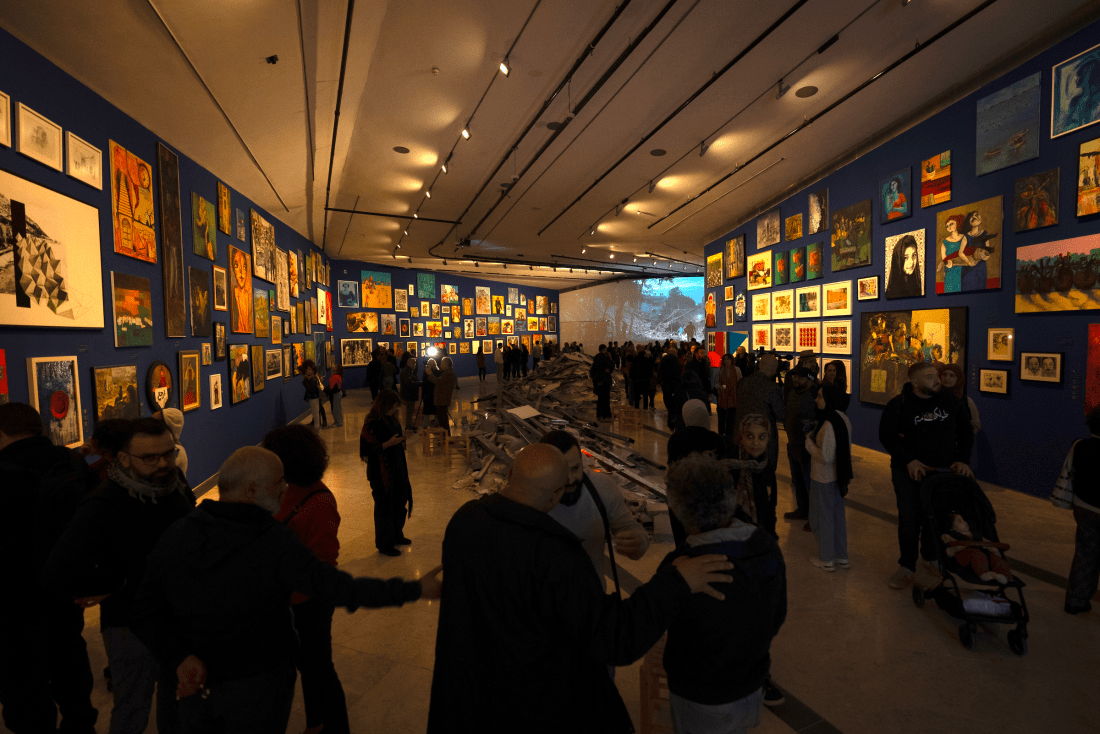
Palestinian Museum in West Bank Reopens After Months of Closure– due to Israel’s bombings
The institution debuted three separate exhibitions that together “stand against the atrocities and systematic annihilation of Gaza.” Read more about the re-opening of the museum here .
 Another ruined dinner party...
Thank you, Judy. I’m so grateful for your What to Watch recommendations. I’ll never forget “Little Bird” on Prime. I cried for hours.
I recently watched The Emperor on Crave. Thrilling stuff. (warning: triggering for survivors of sexual violence).
Have an easy day today. Hugs Iman
Sent from a mobile device with small keys. Apologies for brevity and any typographical errors.
LikeLike
Thanks Iman– glad you like it
LikeLike