

“Continue your excellent work” and “Consider joining us for a guided tour in the future.” These were the jaunty remarks in an official letter that disinvited three Black delegates from a meeting with the law clerks of the Supreme Court of Canada (SCC) last month.
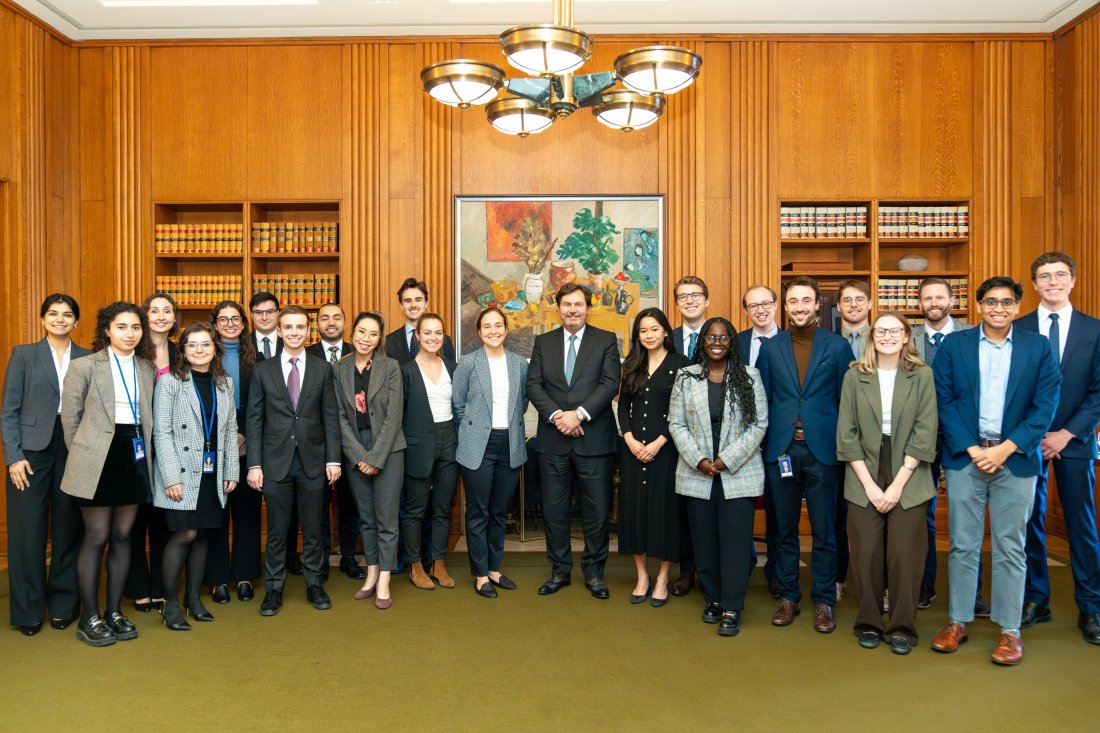
Chantal Carbonneau, chief clerk of the Supreme Court of Canada (SCC) disinvited the three from a meeting convened to discuss the 2022 Halifax Declaration for the Eradication of Racial Discrimination and anti-Black racism in the justice system. Carbonneau’s reason was laid out in a statement:
“We became aware of controversial posts and comments made about the conflict between Israel and Palestinian on social media. These posts and comments had negative and concerning effects on a number of our law clerks.”
Chantal Carbonneau
The three Black leaders are researchers and advocates on race and racism in Canada. Dr El Jones, is a poet, an activist and a political science professor at Mount St Vincent University in Halifax. DeRico Symonds is Director of Justice Strategy with the African Nova Scotian Justice Institute. Benazir Tom Erdimi, is an Ottawa-based student, and founder of The People of Tomorrow a group in support of BIPOC youth. The three were working with Michaëlle Jean, Canada’s former Governor General, and her respected Michaëlle Jean Foundation.
No explanation, no proof, no questions allowed
But that is exactly what happened. With no further explanation, no proof of specific objectionable social media posts or tweets, and no right to question the decision to exclude them, the three were cut out of the meeting held on 15 January, 2024. As Dr El Jones noted, people at the SCC
“said that we couldn’t present on anti-Black racism due to unrelated social media activity, which they won’t identify and then said it was a distraction to the presentation. We know that there’s a deep repression of Palestinian speech in Canada. I think it’s particularly shocking coming from the Supreme Court …. “
Jones and Symonds have said they are open about their support of Palestinian human rights, and they should not be excluded for expressing solidarity with another oppressed group. But they will not tolerate “surveillance” of their social media accounts by employees at the Supreme Court in order to ignore and silence the activists’ views.
‘Safety’ is not the same thing as ‘comfort’– what the law clerks demanded was comfort.
Chief clerk Carbonneau explained that she had to ensure her staff would be “safe” when the Black group was supposed to come to the Supreme Court. What does that mean? Carbonneau hid behind her statement:
“As an employer, the Office of the Registrar of the Supreme Court of Canada has a responsibility to safeguard the mental health and well-being of its employees.”
What nonsense! “Safety” is not the same thing as “comfort”—and what the law clerks demanded was comfort. Clearly they didn’t want to be confronted with ideas they don’t like. The clerks objected to even hearing about Israel’s bloodbath in Gaza. The clerks didn’t want to know about criticism of Israel.
Are you ready to work with some of Canada’s top legal minds? Apply now to join the Supreme Court of Canada 2025-2026 Law Clerk Program: https://scc-csc.ca/empl/lc-aj-eng.aspx#sec1. (this call out is on X, formerly Twitter)
Still the SCC forum (or ‘fireside chat’) is not a kindergarten class. Surely law clerks at Canada’s highest court can listen. I’m guessing the clerks who objected are Jewish and didn’t want to be faced with Black people who offended the clerks’ sensibilities. Not only is this de-platforming and censorship, it also compounds the silencing Black and brown people face when they support justice for Palestinians.
As Jones noted, “Just the very fact that [we] mentioned Palestine is damaging to us [clerks at SCC], and you can’t come. What does that say about their ability to rule mutually on these really important issues?”
Carbonneau and the law clerks danced around the question of criticism of Israel. The three Black people were expected to address merely the question of Blacks and human rights in Canada. But someone at the SCC searched the three people’s social media and noted their pro-Palestinian views. These views are neither illegal nor dangerous. And given Israel’s murder and maiming of nearly 100,000 Palestinians—including 20,000 women and children in the last four months – their criticisms have reverberated through every economic level, race, ethnicity, culture and class of Canadian society.
Clearly it is not Black issues in Canada that scare the clerks…
the mere mention of Palestine and Palestinian rights is anathema to the law clerks.
But how could the law clerks – who conduct research to prepare briefs for Supreme Court Justices on child murders, child pornography, wife killings, constitutional law, sentencing, parole eligibility, Indigenous rights and more, feel so “unsafe” with three Black Canadian activists so as to bar them from their “fireside chat” meeting? Clearly it is not Black issues in Canada that scare the clerks. It is the fact that discussion or the mere mention of Palestine and Palestinian rights is anathema to the clerks.
In the end, only Michaëlle Jean, co-chair, and David D’Oyen, director of the Michaëlle Jean Foundation presented their work. In other words, neither Jean nor D’Oyen stood up for the disinvited Black presenters.

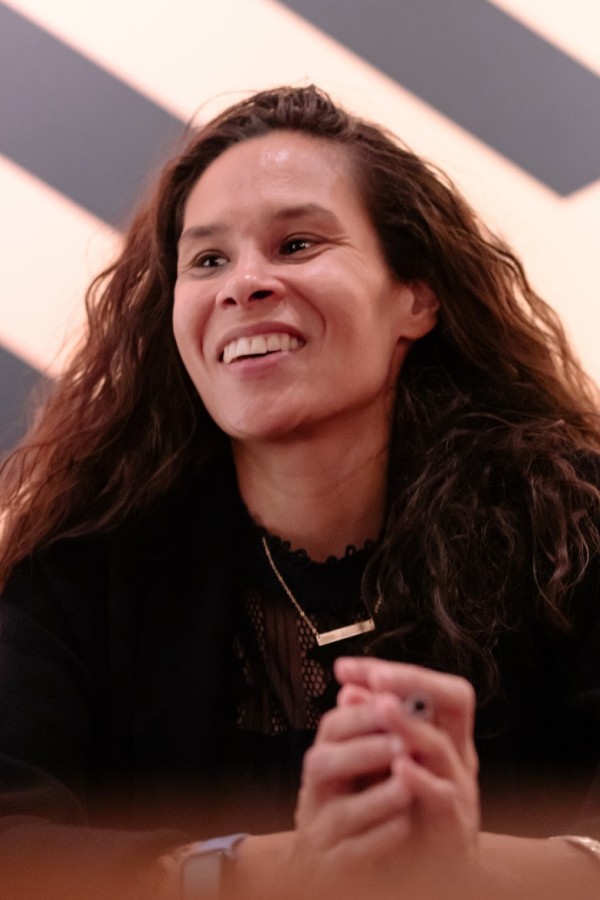
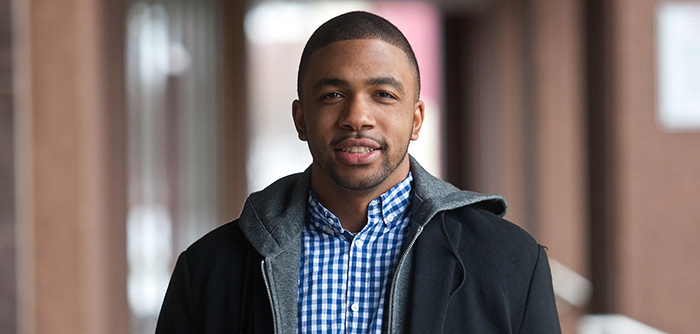
The three Black activists who were de-platformed, and a fourth Léandre Nawej, who works with the Rideau Hall Foundation, have written a letter of complaint to the SCC’s Chief Justice Richard Wagner. They wrote that no one at the court spoke or wrote “directly with those of us accused and disinvited.”
The letter goes on:
“Racism is not simply personal bias or hatred, it is an interlocking set of power relations. Black people are regularly disciplined for including other oppressed groups in our race analysis. We ask to meet with you immediately to discuss this serious issue.”
So far there has been no response.
This is far from the first time racism has surfaced on Parliament Hill. True the Supreme Court building is just down the street, but it’s within the ambit of the Parliamentary precinct.
Racial Profiling on Parliament Hill
In June 2022, a former MP Celina Caesar-Chavannes, who is Black, was questioned by the Parliamentary Protective Service officers when she tried to walk into the precinct wearing her parliamentary pin. The pin is given to current and former members of parliament to enable access to parliament’s buildings. The pin allows the wearer to bypass security searches, and checks on handbags. Caesar-Chavannes was the Liberal MP for Whitby (Ont.) from 2015-2018. Just after she was stopped, former NDP MP Peggy Nash (who is white) walked through security without a second glance by officers.
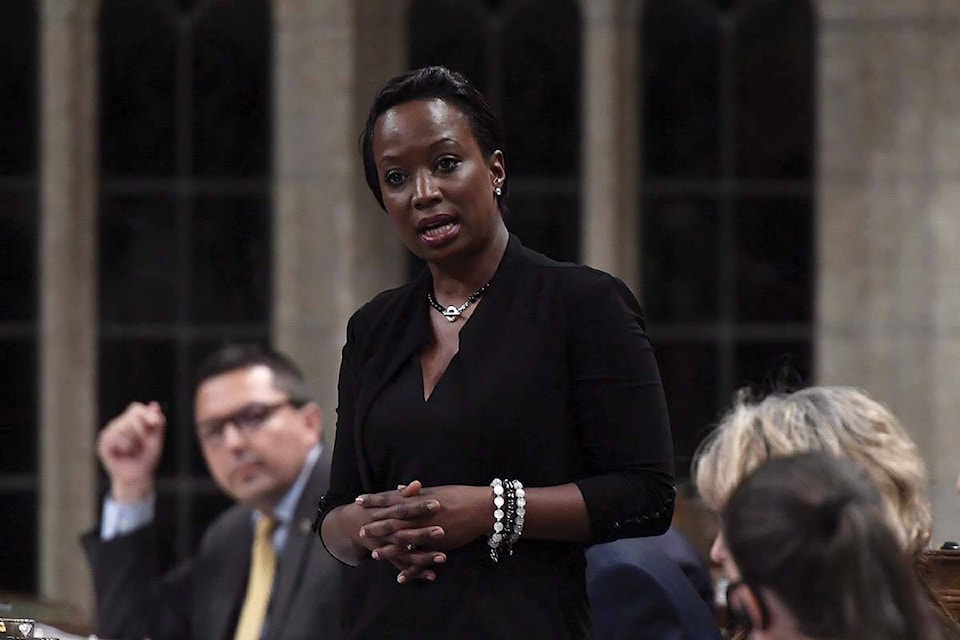
Caesar-Chavannes received a spoken apology from the acting head of Parliamentary Protective Services who suggested she attend a meeting with their diversity, equity and inclusion specialist – five weeks later. Caesar-Chavannes did just that. However, a statement released by the Parliamentary Protective Services said it was going through “a process of assessment and capacity building. We remain committed to continuous improvement, to fostering authentic exchanges, and to receiving constructive feedback.” Their “highest priority is the safety and well-being of employees and visitors to the Hill.”
Really?
As Erika Ibrahim of The Canadian Press notes, “This is not the first time the security service has been called out for profiling people of colour on the Hill.”
Black Voices on the Hill: “a lot of sadness … a lot of hurt”
In February 2019, the commissioner of the Parliamentary Protective Services had to apologize after racially profiling young people at a lobbying event called Black Voices on the Hill. One hundred and fifty representatives of a coalition of Black, human rights, labour and youth groups had been invited to meet with eight federal cabinet ministers. Security officers labelled some participants “dark-skinned people” and asked them to leave a parliamentary cafeteria.
At the time, Peter Flagel of the Michaëlle Jean Foundation said at a press conference held by coalition members, “There was quite a lot of sadness and quite a lot of hurt. There were people that were crying. There was this general sense that they didn’t belong on Parliament Hill, that they didn’t have a place within democratic spaces.”
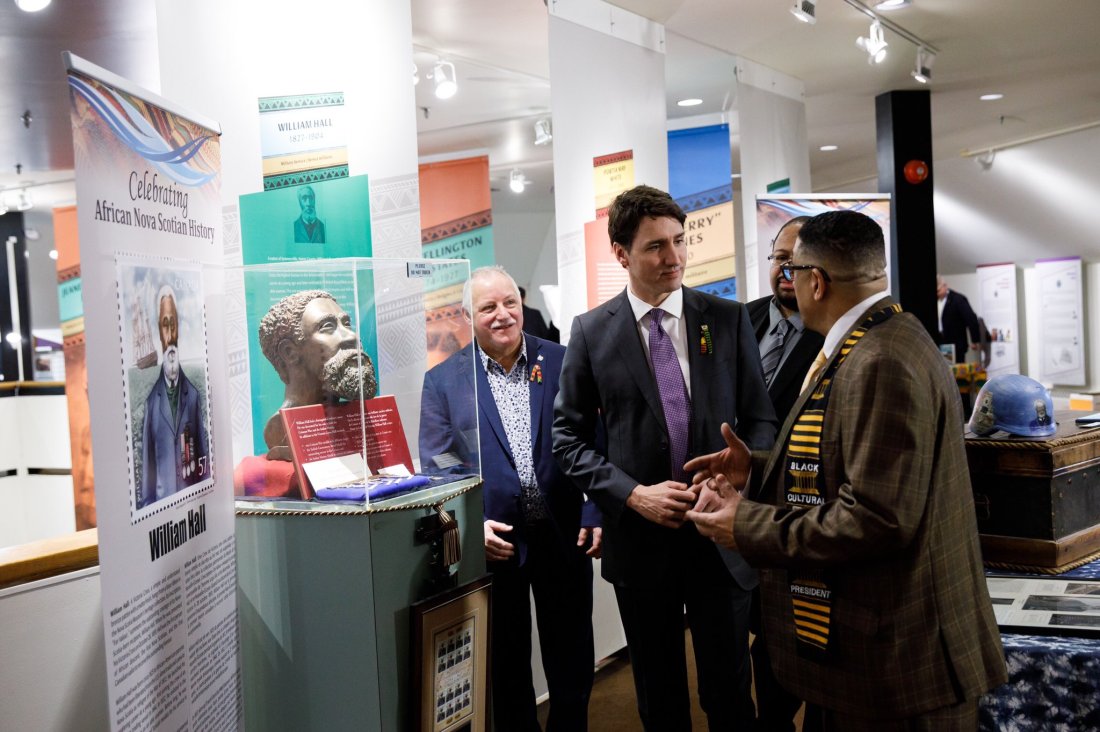
The ”incident” was so serious – and perhaps so emblematic — that later in the month, Prime Minister Trudeau had to apologize in person at a community event at the Black Cultural Centre for Nova Scotia in Cherry Brook, a historic Black community outside of Halifax.
Campaign of Civil Terror continues…
What does this most recent incident tell us? It seems few lessons have been learned. Black Canadians are ignored, excluded and surveilled especially on Parliament Hill. They are considered even more of a threat if they voice support for others who are oppressed. In this case, their support of Palestinians – and against Israel’s genocide – was forbidden. The powerful control the discussion and the powerful include law clerks at the Supreme Court of Canada. This is part of the whole campaign of civil terror which I’ve written about before, here, here and here . It’s not a one-off. And there are more to come– more people in this country will be censored, fired, suspended, have opportunities curtailed every day Israel’s war on Gaza continues. And make no mistake, it’s the Blacks and brown people in our country who are in the crosshairs of the powerful.
Featured image at the top: Bust of Right Honourable Beverley McLachlin, PC, CC. Chief Justice of Canada’s Supreme Court 2000-2017. She was the first woman to have that role. In retirement, she’s become a writer. She’s written two novels, Full Disclosure (2018) and Denial (2021). Sculptor: Keith R. Hamilton, Q.C.
 Another ruined dinner party...